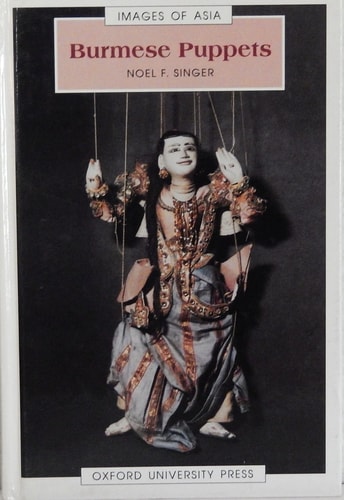
Burmese Puppets
0
0
As an Amazon Associate and affiliate partner, Menrva Books earns from qualifying purchases. Learn more
Author Description
The remarkable dexterity of Burmese puppeteers was first noted by Western observers in the latter half of the eighteenth century. Unfortunately, because of the language barrier, these observers were only able to report on the visual aspect of a performance and so missed out on the elegantly composed songs and courtly dialogue of the amazingly lifelike characters. Although the puppet theatre in Burma became a vehicle for state propaganda, it was also employed by the people to criticize the misuse of power. Thought to date from the twelfth century, it grew rapidly in popularity and by 1820 was considered superior to other forms of entertainment. So great was its influence that the movements of the puppets continue to be copied by dancers of today. The rich cultural and religion background of Burma provided playwrights with ample opportunity to produce a large number of plays. It was a male dominated profession, with men vocalists playing the part of females. Emphasis was placed on the quality of the dialogue and the puppets became secondary. This trend was reversed and by 1900, due to competition from the live theatre, manipulatory techniques achieved amazing results. In this book, Singer describes the customs, regulations, and changing patterns of this art form, and the efforts being made by the few remaining troupes to keep the tradition alive.
Menrva's Summary
THE THESIS
This book investigates the historical evolution, cultural significance, and technical development of the Burmese puppet theatre tradition. Noel F. Singer, an expert on Burmese history and art, utilizes historical records and observations to trace the art form from its twelfth-century origins to its modern-day preservation efforts. The text argues that the puppet theatre served as both a tool for state propaganda and a vital medium for social critique, reflecting the complex political and religious landscape of Burma.
THE SCOPE MAP
What You Will Find
- Historical timeline of Burmese puppetry from the twelfth century to the twentieth century.
- Analysis of the transition from dialogue-focused performances to movement-based manipulation.
- Examination of the social role of puppeteers and the gender dynamics within the profession.
- Documentation of the customs, regulations, and current efforts to sustain remaining troupes.
THE AUTHORITY PERSPECTIVE
Experts recognize this work as a foundational text for understanding the intersection of traditional Burmese performance and political history. Readers frequently note the clarity with which the author documents the technical shifts in puppetry alongside the broader cultural context of the region.
Page Count:
126
Publication Date:
1993-01-28
Publisher:
Oxford University Press
ISBN-10:
0195885899
ISBN-13:
9780195885897
History
Art History
Asia
Culture
Puppets
Community Tags
Similar Books