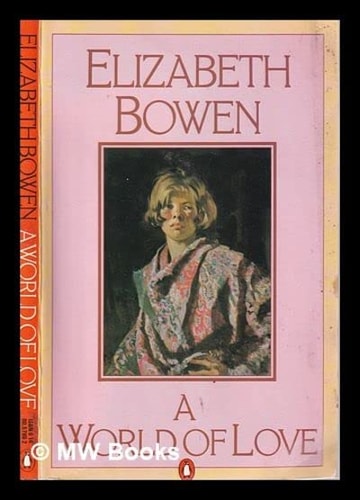
A World of Love
0
0
As an Amazon Associate and affiliate partner, Menrva Books earns from qualifying purchases. Learn more
Author Description
In a writing career that spanned the 1920s to the 1960s, Anglo-Irish author Elizabeth Bowen created a rich and nuanced body of work in which she enlarged the comedy of manners with her own stunning brand of emotional and psychological depth.In A World of Love, an uneasy group of relations are living under one roof at Montefort, a decaying manor in the Irish countryside. When twenty-year-old Jane finds in the attic a packet of love letters written years ago by Guy, her mother’s one-time fiance who died in World War I, the discovery has explosive repercussions. It is not clear to whom the letters are addressed, and their appearance begins to lay bare the strange and unspoken connections between the adults now living in the house. Soon, a girl on the brink of womanhood, a mother haunted by love lost, and a ruined matchmaker with her own claim on the dead wage a battle that makes the ghostly Guy as real a presence in Montefort as any of the living.
Menrva's Summary
THE PULSE
The discovery of a packet of long-lost love letters in a decaying Irish manor forces the inhabitants of Montefort to confront the unresolved ghosts of their past. Jane, a young woman on the cusp of adulthood, unearths correspondence written by Guy, a man killed in World War I who remains a central, spectral figure in the lives of the household. As she attempts to identify the intended recipient of these letters, she inadvertently exposes the fragile, unspoken tensions between her mother and the other residents. The narrative examines how the memory of a dead man exerts a physical and psychological pressure on the living, creating a claustrophobic atmosphere where past and present collide within the confines of the estate.
INSIDE THE PAGES
- Atmospheric setting of a decaying Irish manor
- Exploration of the lingering influence of the deceased
- Psychological tension between family members
- Examination of the transition from youth to adulthood
- Use of epistolary elements to drive the plot
- Focus on the comedy of manners genre
- Intricate character studies of the residents of Montefort
- Subtle critique of social expectations and romantic obsession
THE COLLECTIVE ECHO
Readers and critics often note the precise, evocative prose that characterizes Bowen's exploration of the human psyche. Discussion frequently centers on the ethereal, almost haunting quality of the narrative as it balances the mundane realities of manor life with the heavy weight of historical memory. Many highlight the effectiveness of the setting, which functions as a mirror for the internal instability of the characters. The pacing is described as deliberate, favoring character development and psychological nuance over rapid plot progression. This work is frequently cited for its ability to render the influence of the past as a tangible, active force within the present.
Page Count:
160
Publication Date:
1983-01-01
Publisher:
Penguin
ISBN-10:
0140057862
ISBN-13:
9780140057867
Drama
Fiction
Classics
Irish literature
Psychological
Gothic
classic