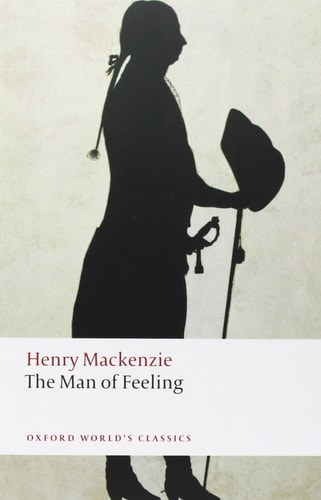
The Man of Feeling
0
0
As an Amazon Associate and affiliate partner, Menrva Books earns from qualifying purchases. Learn more
Author Description
Mackenzie's hugely popular novel of 1771 is the foremost work of the sentimental movement, in which sentiment and sensibility were allied with true virtue, and sensitivity is the mark of the man of feeling. The hero, Harley, is followed in a series of episodes demonstrating his benevolence in an uncaring world: he assists the down-trodden, loses his love, and fails to achieve worldly success. The novel asks a series of vital questions: what morality is possible in a complex commercial world? Does trying to maintain it make you a saint or a fool? Is sentiment merely a luxury for the leisured classes?About the Series: For over 100 years Oxford World's Classics has made available the broadest spectrum of literature from around the globe. Each affordable volume reflects Oxford's commitment to scholarship, providing the most accurate text plus a wealth of other valuable features, including expert introductions by leading authorities, voluminous notes to clarify the text, up-to-date bibliographies for further study, and much more.
Menrva's Summary
THE PULSE
The central conflict arises from the protagonist's attempt to maintain moral purity and extreme sensitivity within a callous, commercialized society. Harley, a man defined by his excessive benevolence and emotional vulnerability, navigates a series of episodic encounters that test his integrity. He faces constant opposition from a world that prioritizes material gain over human connection, leading to personal loss and social failure. The narrative is presented through a fragmented, non-linear framework, often utilizing a frame story that emphasizes the fragility of the protagonist's ideals.
INSIDE THE PAGES
- Episodic narrative structure focusing on individual moral encounters
- Use of a frame narrative to distance the reader from the protagonist
- Emphasis on emotional response as a metric of virtue
- Exploration of the tension between private sentiment and public commerce
- Characterization of the hero as a passive observer of social injustice
- Frequent use of didactic moral reflection
- Stylistic focus on the language of sensibility and refined feeling
- Critique of the emerging capitalist values of the 18th century
THE COLLECTIVE ECHO
Discussion often centers on the novel's role as a primary example of the sentimental movement in 18th-century literature. Readers frequently highlight the stark contrast between Harley's internal moral landscape and the harsh, indifferent environment he inhabits. Critics often debate whether the author intends for the protagonist to be viewed as a virtuous saint or a naive fool whose sensitivity renders him ineffective. The pacing is noted for its deliberate, reflective quality, which prioritizes thematic exploration over traditional plot progression. This work remains a significant point of reference for those interested in the historical development of moral philosophy and emotional expression in fiction.
Page Count:
119
Publication Date:
2009-08-03
Publisher:
Oxford University Press
ISBN-10:
019953862X
ISBN-13:
9780199538621
Fiction
Historical
Sentimental
Fiction psychological
classic
Community Tags
Other Editions(6)





Similar Books





Reader Comments
Share Your Thoughts
No comments yet. Be the first to share your thoughts!