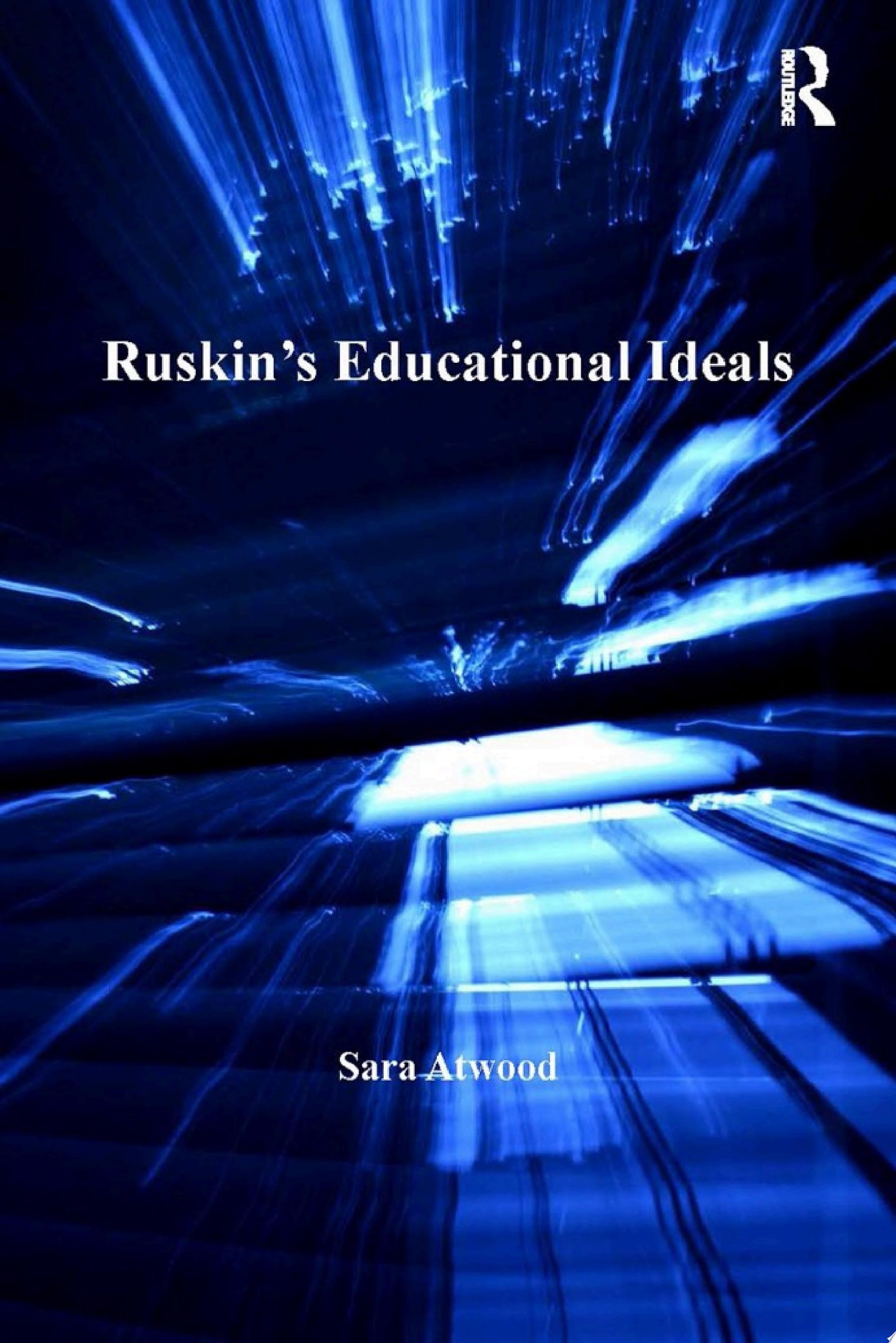
Ruskin's Educational Ideals
0
0
As an Amazon Associate and affiliate partner, Menrva Books earns from qualifying purchases. Learn more
Author Description
Focusing on John Ruskin as a teacher and on his greatest educational work, Fors Clavigera, Sara Atwood examines Ruskin's varied roles in education, the development of his teaching philosophy and style, and his vision for educational reform. Atwood maintains that the letters of Fors Clavigera constitute not only a treatise on education but a dynamic educational experiment, serving to set forth Ruskin's ideas about education while simultaneously educating his readers according to those very ideas. Closely examining Ruskin's life and writings, her argument traces the development of his moral aesthetic and increasing involvement in social reform; his methods and approach as an art instructor; and his dissatisfaction with contemporary educational practice. A chapter on Ruskin's legacy takes account of his influence on late Victorian and Edwardian educators, including J. H. Whitehouse and the Bembridge School; the Ruskin colonies in Tennessee, Florida, and Georgia; and the relevance of Ruskin's ideas to ongoing educational debates about teacher pay, state/national testing, retention, and the theory of the competent child. Historically well-grounded and forcefully argued, Atwood's study is not only a valuable contribution to scholarship on Ruskin and the Victorian period but an enjoinder for us to reconsider how Ruskin's educational philosophy might be of benefit today.
Menrva's Summary
THE THESIS
This book investigates John Ruskin's multifaceted contributions to education and his pedagogical philosophy as expressed through his work, Fors Clavigera. Sara Atwood examines Ruskin's roles as a teacher, tracing the evolution of his educational ideals and methods, particularly within the context of his correspondence in Fors Clavigera. The author argues that these letters functioned as both a theoretical exposition and a practical application of Ruskin's educational theories, actively engaging readers in his pedagogical vision. The study delves into Ruskin's moral aesthetic, his engagement with social reform, his practical art instruction, and his critiques of contemporary educational systems.
THE SCOPE MAP
- Analysis of John Ruskin's roles in education
- Development of Ruskin's teaching philosophy and style
- Fors Clavigera as both a treatise and an educational experiment
- Ruskin's ideas on moral aesthetics and social reform
- Ruskin's methods and approach as an art instructor
- Ruskin's critique of contemporary educational practices
- Ruskin's legacy and influence on Victorian and Edwardian educators
- Relevance of Ruskin's ideas to modern educational debates
THE AUTHORITY PERSPECTIVE
Sara Atwood's study is recognized as a significant contribution to scholarship on John Ruskin and the Victorian period. The work is noted for its historical grounding and forceful argumentation, offering a comprehensive examination of Ruskin's educational ideals. It highlights the dual nature of Fors Clavigera as both a theoretical text and an active pedagogical tool. The book's exploration of Ruskin's legacy and its relevance to contemporary educational issues makes it a valuable resource for scholars and educators alike.
Page Count:
202
Publication Date:
2016-04-08
Publisher:
Taylor & Francis
ISBN-10:
1317060601
ISBN-13:
9781317060604
Non-Fiction
History
Education
Victorian Era
Art Instruction
Social Reform
Community Tags
Other Editions(4)



Similar Books



Reader Comments
Share Your Thoughts
No comments yet. Be the first to share your thoughts!