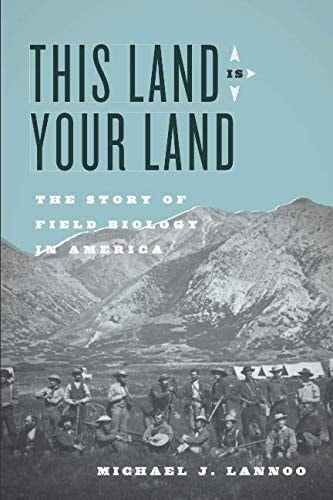
This Land Is Your Land: The Story of Field Biology in America
0
0
As an Amazon Associate and affiliate partner, Menrva Books earns from qualifying purchases. Learn more
Author Description
Field biology is enjoying a resurgence due to several factors, the most important being the realization that there is no ecology, no conservation, and no ecosystem restoration without an understanding of the basic relationships between species and their environments—an understanding gleaned only through field-based natural history. With this resurgence, modern field biologists find themselves asking fundamental existential questions such as: Where did we come from? What is our story? Are we part of a larger legacy? In This Land Is Your Land, seasoned field biologist Michael J. Lannoo answers these questions and more in a tale rooted in the people and institutions of the Midwest. It is a story told from the ground up, a rubber boot–based natural history of field biology in America. Lannoo illuminates characters such as John Wesley Powell, William Temple Hornaday, and Olaus and Adolph Murie—homegrown midwestern field biologists who either headed east to populate major research centers or went west to conduct their fieldwork along the frontier. From the pioneering work of Victor Shelford, Henry Chandler Cowles, and Aldo Leopold to contemporary insights from biologists such as Jim Furnish and historians such as William Cronon, Lannoo’s unearthing of American—and particularly midwestern—field biologists reveals how these scientists influenced American ecology, conservation biology, and restoration ecology, and in turn drove global conservation efforts through environmental legislation and land set-asides. This Land Is Your Land reveals the little-known legacy of midwestern field biologists, whose ethos and discoveries have enabled us to preserve and understand not just their land, but all lands.
Menrva's Summary
THE THESIS
This Land Is Your Land investigates the origins and legacy of field biology in America, particularly focusing on its roots in the Midwest. The book traces the development of this scientific discipline through the lives and work of key figures, from early pioneers like John Wesley Powell and Victor Shelford to contemporary scientists and historians. It highlights how these midwestern naturalists and biologists shaped American ecology, conservation, and restoration efforts, influencing national and global environmental policies and land preservation initiatives.
THE SCOPE MAP
- The resurgence of field biology and its importance for ecology, conservation, and restoration.
- Biographical profiles of influential midwestern field biologists such as John Wesley Powell, William Temple Hornaday, Olaus and Adolph Murie, Victor Shelford, Henry Chandler Cowles, and Aldo Leopold.
- The contributions of contemporary figures like Jim Furnish and historians like William Cronon.
- The influence of midwestern field biologists on American ecology, conservation biology, and restoration ecology.
- The impact of these scientists on global conservation efforts through environmental legislation and land set-asides.
- The ethos and discoveries of midwestern field biologists that have enabled the preservation and understanding of diverse landscapes.
THE AUTHORITY PERSPECTIVE
The book is presented as a narrative rooted in the people and institutions of the Midwest, offering a 'rubber boot-based natural history' of field biology in America. It aims to answer fundamental questions about the origins and legacy of the discipline by illuminating the work of key figures. The author's approach emphasizes how these scientists drove significant advancements in ecology and conservation, ultimately influencing global environmental efforts.
Page Count:
325
Publication Date:
2018-08-10
Publisher:
University of Chicago Press
ISBN-10:
022658089X
ISBN-13:
9780226580890
Non-Fiction
Science
History
Biography
Ecology
Conservation
Community Tags
Similar Books