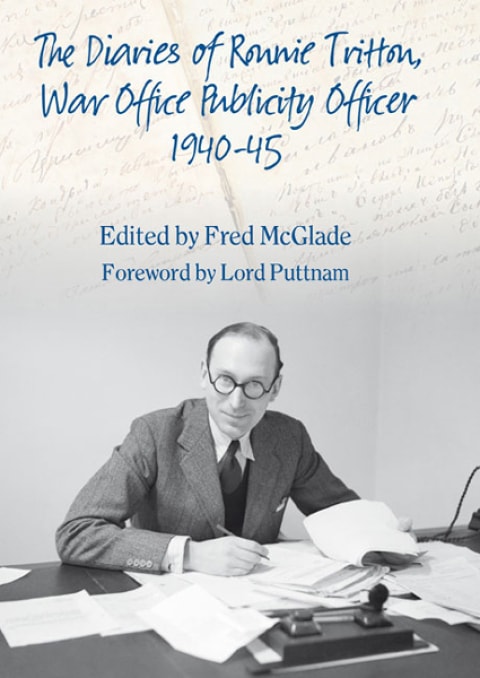
The Diaries of Ronald Tritton, War Office Publicity Officer 1940-45
0
0
As an Amazon Associate and affiliate partner, Menrva Books earns from qualifying purchases. Learn more
Author Description
The diary kept by Ronald Edward Tritton is a revealing and often frank record of the internal conflicts at the Public Relations Department of the War Office and the Ministry of Information during the Second World War. Ronald Tritton was recruited in 1940 for the position of War Office Publicity Officer by Major-General Beith, Director of Public Relations at the War Office, to transform the dysfunctional department. The first civilian to hold the post, it was hoped his professional skills gained in Public Relations for the Savoy Hotel Group would be a valuable tool to overcome the British Army's negativity towards the use of any form of visual publicity. Internal conflicts between the service film units, the newsreel companies and the Americans proved a difficult balancing act for Tritton, as these diaries reveal. They are also an invaluable source of evidence not only for the growth and war effort of the Army Film Unit /Army Film & Photographic Unit, but also for the newsreels. With the support of Major-General Edgeworth-Johnstone, the Assistant Director of Public Relations, Ronald Tritton became the catalyst for the British Army Film and Photographic Unit, despite considerable military and political opposition. This unit was to grow in strength and professionalism throughout the conflict, producing some of the most frequently used film and photographic material of the war. The diaries also provide a record of life at the Savoy Hotel, London, during the Second World War (Tritton was on a retainer there and counted David Niven amongst his friends) and a wonderfully evocative, almost tangible sense, of London and life in the south of England during those years.
Menrva's Summary
THE THESIS
The diaries of Ronald Tritton offer a candid look at the challenges of managing public relations for the British Army during World War II. As the first civilian War Office Publicity Officer, Tritton was tasked with transforming a dysfunctional department, facing resistance from the military and navigating complex relationships with service film units, newsreel companies, and American counterparts. His efforts were instrumental in the growth of the Army Film and Photographic Unit, despite significant opposition.
THE SCOPE MAP
- A detailed account of internal conflicts within the War Office Public Relations Department and the Ministry of Information.
- Ronald Tritton's recruitment and his efforts to overcome the British Army's reluctance towards visual publicity.
- The balancing act required to manage relationships between service film units, newsreel companies, and American forces.
- Evidence of the growth and war effort of the Army Film Unit / Army Film & Photographic Unit.
- Insights into the development of the British Army Film and Photographic Unit, supported by Major-General Edgeworth-Johnstone.
- A record of life at the Savoy Hotel, London, during WWII, including Tritton's social connections.
- Evocative descriptions of London and life in the south of England during the war years.
THE AUTHORITY PERSPECTIVE
This work is presented as a primary source, offering direct insight into the operational and political landscape of wartime public relations. The diaries are valued for their frankness regarding internal conflicts and the challenges faced by Ronald Tritton in establishing and professionalizing the Army Film and Photographic Unit. The inclusion of personal observations on life in London and at the Savoy Hotel adds a broader social history dimension to the military narrative. The material suggests a detailed and evidence-based historical account, likely appealing to specialists in military history and media studies.
Page Count:
1157
Publication Date:
2012-01-01
Publisher:
Helion and Company
ISBN-10:
190891680X
ISBN-13:
9781908916808
History
Non-Fiction
Biography
Public Relations
Military History
Community Tags
Similar Books