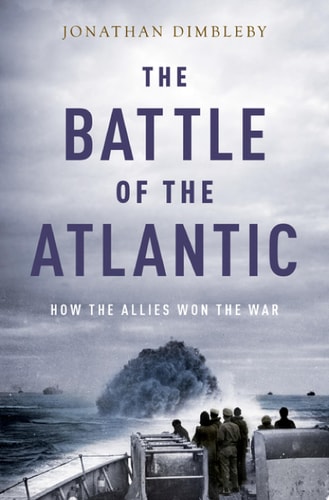
The Battle of the Atlantic: How the Allies Won the War
0
0
As an Amazon Associate and affiliate partner, Menrva Books earns from qualifying purchases. Learn more
Author Description
"The only thing that ever really frightened me during the war was the U-boat peril," wrote Winston Churchill in his monumental history of World War Two. Churchill's fears were well-placed-the casualty rate in the Atlantic was higher than in any other theater of the entire war. The enemy was always and constantly there and waiting, lying just over the horizon or lurking beneath the waves. In many ways, the Atlantic shipping lanes, where U-boats preyed on American ships, were the true front of the war. England's very survival depended on assistance from the United States, much of which was transported across the ocean by boat. The shipping lanes thus became the main target of German naval operations between 1940 and 1945. The Battle of the Atlantic and the men who fought it were therefore crucial to both sides. Had Germany succeeded in cutting off the supply of American ships, England might not have held out. Yet had Churchill siphoned reinforcements to the naval effort earlier, thousands of lives might have been preserved. The battle consisted of not one but hundreds of battles, ranging from hours to days in duration, and forcing both sides into constant innovation and nightmarish second-guessing, trying desperately to gain the advantage of every encounter. Any changes to the events of this series of battles, and the outcome of the war-as well as the future of Europe and the world-would have been dramatically different.Jonathan Dimbleby's The Battle of the Atlantic offers a detailed and immersive account of this campaign, placing it within the context of the war as a whole. Dimbleby delves into the politics on both sides of the Atlantic, revealing the role of Bletchley Park and the complex and dynamic relationship between America and England. He uses contemporary diaries and letters from leaders and sailors to chilling effect, evoking the lives and experiences of those who fought the longest battle of World War Two. This is the definitive account of the Battle of the
Menrva's Summary
THE THESIS
This work investigates how the Allied victory in the Battle of the Atlantic served as the decisive factor in the survival of Great Britain and the ultimate outcome of World War II. Jonathan Dimbleby, a veteran journalist and broadcaster, utilizes a vast array of primary sources, including contemporary diaries, letters, and official records, to construct a comprehensive analysis of the naval campaign. He argues that the conflict was not a single event but a protracted series of engagements that forced both the Allies and the Axis powers into a constant cycle of technological innovation and strategic adaptation.
THE SCOPE MAP
What You Will Find
- Detailed analysis of the U-boat campaign between 1940 and 1945.
- Examination of the political dynamics between the United States and Great Britain.
- Insights into the intelligence operations at Bletchley Park.
- Personal accounts from sailors and political leaders involved in the conflict.
Scope Limits
- The text focuses primarily on the Atlantic theater and does not provide an exhaustive history of the Pacific or Eastern fronts.
- It does not cover post-war naval developments or the long-term geopolitical legacy of the U-boat fleet beyond the immediate conclusion of the war.
THE AUTHORITY PERSPECTIVE
Historians and military scholars frequently cite this work for its meticulous integration of high-level political strategy and the visceral, ground-level experiences of those serving at sea. Readers often note the density of the prose, which balances technical naval detail with a clear narrative focus on the human cost of the conflict.
Page Count:
582
Publication Date:
2016-01-01
Publisher:
Oxford University Press
ISBN-10:
0190495871
ISBN-13:
9780190495879
Non-Fiction
History
Naval history
American History
Military History
Modern History
World War
Community Tags
Similar Books