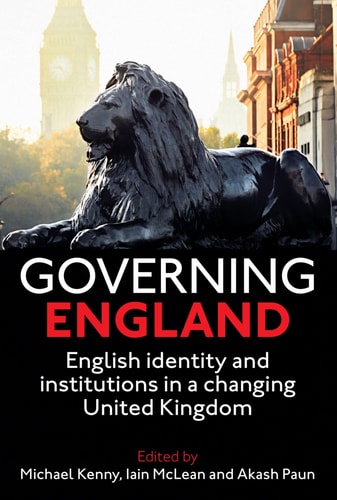
Governing England: English Identity and Institutions in a Changing United Kingdom
0
0
As an Amazon Associate and affiliate partner, Menrva Books earns from qualifying purchases. Learn more
Author Description
England is ruled directly from Westminster by institutions and parties that are both English and British. The non-recognition of England reflects a longstanding assumption of 'unionist statecraft' that to draw a distinction between what is English and what is British risks destabilising the union state. The book examines evidence that this conflation of England and Britain is growing harder to sustain, in light of increasing political divergence between the nations of the UK and the awakening of English national identity. These trends were reflected in the 2016 vote to leave the European Union, driven predominantly by English voters (outside London). Brexit was motivated in part by a desire to restore the primacy of the Westminster Parliament, but there are countervailing pressures for England to gain its own representative institutions, and for devolution to England's cities and regions.The book presents competing interpretations of the state of English nationhood, examining the views that little of significance has changed, that Englishness has been captured by populist nationalism, and that a more progressive, inclusive Englishness is struggling to emerge. We conclude that England's national consciousness remains fragmented due to deep cleavages in its political culture, and the absence of a reflective national conversation about England's identity and relationship with the rest of the UK and the wider world. Brexit was a (largely) English revolt, tapping into unease about England's place within two intersecting Unions (British and European), but it is easier to identify what the nation spoke against than what it voted for.
Menrva's Summary
THE THESIS
This work investigates whether the traditional conflation of English and British identity remains sustainable within the context of a rapidly evolving United Kingdom. The authors, Akash Paun, Iain McLean, and Michael Kenny, utilize political science frameworks and historical analysis to examine how the blurring of these identities has historically served to stabilize the union state. They argue that contemporary political divergence and the 2016 Brexit vote have exposed deep-seated fractures in English national consciousness, necessitating a re-evaluation of how England is governed.
THE SCOPE MAP
What You Will Find
- Analysis of the historical assumptions behind unionist statecraft and Westminster governance.
- Examination of the 2016 European Union referendum as a manifestation of English political identity.
- Evaluation of competing theories regarding the rise of populist nationalism versus progressive Englishness.
- Discussion of the pressures for regional devolution and the potential for new representative institutions in England.
THE AUTHORITY PERSPECTIVE
Experts recognize this volume as a critical contribution to the study of British constitutional politics and national identity. Readers frequently note the academic rigor of the text, which provides a balanced overview of the complex relationship between Englishness and the broader UK political structure.
Page Count:
320
Publication Date:
2019-01-29
Publisher:
Oxford University Press
ISBN-10:
0197266460
ISBN-13:
9780197266465
History
Politics
Sociology
United Kingdom
Government
Great Britain
Community Tags
Similar Books