Social Brain, Distributed Mind
0
0
As an Amazon Associate and affiliate partner, Menrva Books earns from qualifying purchases. Learn more
Author Description
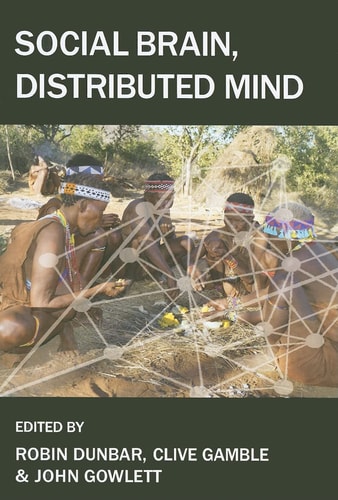
To understand who we are and why we are, we need to understand both modern humans and the ancestral stages that brought us to this point. The core to that story has been the role of evolving cognition--the social brain--in mediating the changes in behavior that we see in the archaeological record. This volume brings together two powerful approaches--the social brain hypothesis and the concept of the distributed mind, and compares perspectives on these two approaches from a range of disciplines, including archaeology, psychology, philosophy, sociology and the cognitive and evolutionary sciences.A particular focus is on the role that material culture plays as a scaffold for distributed cognition, and how almost three million years of artefact and tool uses provides the data for tracing key changes in areas such as language, technology, kinship, music, social networks and the politics of local, everyday interaction in small-world societies. A second focus is on how, during the course of hominin evolution, increasingly large spatially distributed communities created stresses that threatened social cohesion.This volume offers the possibility of new insights into the evolution of human cognition and social lives that will further our understanding of the relationship between mind and world.
Menrva's Summary
THE THESIS
This volume investigates how the evolution of human cognition and the development of material culture shaped the social structures of ancestral and modern human societies. The authors, including prominent researchers in evolutionary psychology and archaeology, synthesize the social brain hypothesis with the concept of the distributed mind. By examining three million years of archaeological data, the text argues that human cognitive development is inextricably linked to the tools, artifacts, and social networks that allowed early hominins to manage increasingly complex community interactions.
THE SCOPE MAP
What You Will Find
- Analysis of the social brain hypothesis and distributed cognition frameworks.
- Examination of material culture as a scaffold for cognitive processes.
- Longitudinal study of hominin evolution spanning three million years of tool use.
- Interdisciplinary perspectives covering archaeology, philosophy, and evolutionary sciences.
THE AUTHORITY PERSPECTIVE
Experts identify this collection as a significant interdisciplinary resource for understanding the intersection of cognitive evolution and material culture. Readers frequently note the academic density of the prose, which serves as a foundational text for scholars in the fields of human evolution and social cognition.
Page Count:
548
Publication Date:
2010-06-25
Publisher:
British Academy
ISBN-10:
0197264522
ISBN-13:
9780197264522
Psychology
Evolutionary Psychology
Sociology
Archaeology
Evolutionary Biology
Anthropology
Community Tags
Similar Books