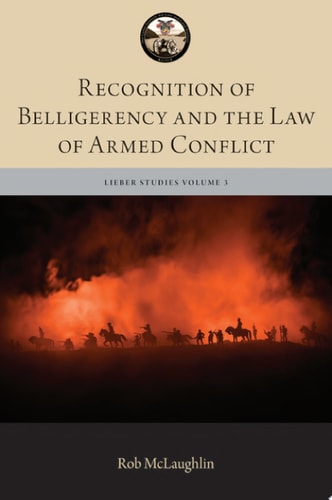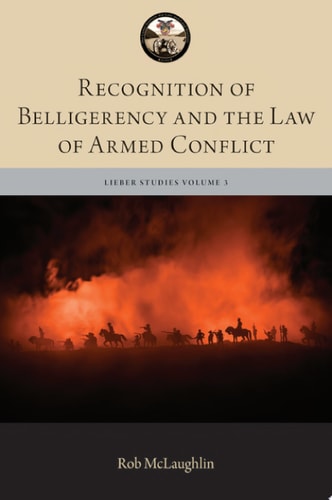
Recognition of Belligerency and the Law of Armed Conflict
0
0
As an Amazon Associate and affiliate partner, Menrva Books earns from qualifying purchases. Learn more
Author Description
Prior To The Progressive Development Of The Law Of Armed Conflict Heralded By The 1949 Geneva Conventions--most Particularly In Relation To The Concepts Of International And Non-international Armed Conflict--the Customary Doctrine On Recognition Of Belligerency Functioned For Almost 200 Years As The Definitive Legal Scheme For Differentiating Internal Conflict From Civil Wars, In Which The Law Of War As Applicable Between States Applied De Jure. Employing A Legal Historical Approach, This Book Describes The Thematic And Practical Fundamentals Of The Doctrine, And Analyzes Some Of The More Significant Challenges To Its Application. In Doing So, It Assesses Whether, How, And Why The Doctrine On Recognition Of Belligerency Was Considered Fit For Purpose, And Seeks To Inform Debate As To Its Continuity And Utility Within The Modern Scheme Of The Law Of Armed Conflict.
Menrva's Summary
THE THESIS
This book investigates the historical function, practical application, and eventual decline of the doctrine of recognition of belligerency within the framework of international law. Robert McLaughlin, an expert in military law, utilizes a legal-historical methodology to examine how this doctrine served as the primary mechanism for distinguishing internal conflicts from civil wars prior to the 1949 Geneva Conventions. The text assesses the doctrine's historical utility and evaluates its relevance in contemporary debates regarding the modern law of armed conflict.
THE SCOPE MAP
What You Will Find
- Historical analysis of the doctrine of recognition of belligerency over a 200-year period.
- Comparative study of legal distinctions between internal conflicts and civil wars.
- Examination of the impact of the 1949 Geneva Conventions on established customary law.
- Critical assessment of the doctrine's fitness for purpose in modern legal frameworks.
THE AUTHORITY PERSPECTIVE
Legal scholars and practitioners view this work as a significant contribution to the history of international humanitarian law. The text is noted for its rigorous academic approach and its ability to clarify complex shifts in the legal classification of armed conflicts.
Page Count:
400
Publication Date:
2020-01-01
Publisher:
Oxford University Press
ISBN-10:
0197507069
ISBN-13:
9780197507063
History
International Law
Belligerency
Military History
Law