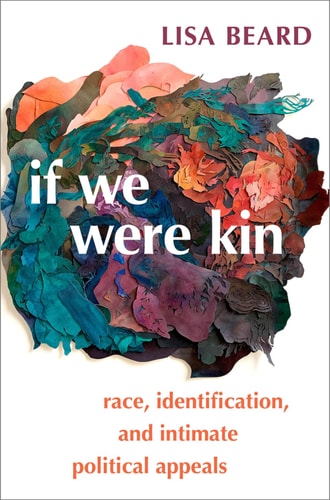
If We Were Kin: Race, Identification, and Intimate Political Appeals
0
0
As an Amazon Associate and affiliate partner, Menrva Books earns from qualifying purchases. Learn more
Author Description
In June 1973, amid ideological rifts in the U.S. gay liberation movement, thousands of people gathered in New York City's Washington Square Park to commemorate the fourth anniversary of the Stonewall Rebellion. Partway through the rally, Street Transvestite Action Revolutionaries (STAR) co-founder Sylvia Rivera fought her way to the stage to address the predominantly white, middle class lesbian and gay crowd. Over the din of their boos and jeers, Rivera reprimanded the crowd for failing in their responsibilities to their "gay brothers and sisters" in jail, detailed the sacrifices she had made for the movement, and called them into the politics of STAR, "The people who are trying to do something for all of us and not men and women that belong to a white middle class white club! And that is what you all belong to!" Rivera's appeal thus worked through a push-pull of distance and belonging, shaming the movement for its assimilatory turn while invoking forms of kinship and calling her listeners into an expansive multi-issue liberation politics. How does a sense of intimacy call people into political community? If We Were Kin is about the we of politics--how that we is made, fought over, and remade--and how these struggles lie at the very core of questions about power and political change. Across a range of sites in racial justice and queer/trans liberation movements--from speeches by James Baldwin and Sylvia Rivera in the 1960s and 1970s to contemporary immigrant justice campaigns by the antiracist LGBTQ organization Southerners on New Ground (SONG)--Lisa Beard traces a distinct lineage of appeals that challenge atomized and hierarchical racial formations in the United States and advance powerful visions of political relationships rooted in mutuality and shared freedom. In plumbing the deeper registers of identificatory appeals, Beard transforms understandings of identity, solidarity, political confrontation, and apparent loss/failure as points of possibility.
Menrva's Summary
THE THESIS
How does the construction of political identity through intimate appeals shape the formation of community and the pursuit of social change? Lisa Beard, a scholar of political theory, investigates the rhetorical strategies used by activists to bridge divides and foster solidarity within racial justice and queer liberation movements. By analyzing historical and contemporary speeches and campaigns, the author argues that these appeals to kinship are not merely emotional, but are essential mechanisms for challenging hierarchical power structures and envisioning collective freedom.
THE SCOPE MAP
What You Will Find
- Analysis of historical rhetoric from figures such as Sylvia Rivera and James Baldwin.
- Examination of contemporary immigrant justice campaigns led by organizations like Southerners on New Ground (SONG).
- A theoretical framework for understanding how 'we' is constructed in political discourse.
- Exploration of the intersection between racial justice and queer/trans liberation movements.
THE AUTHORITY PERSPECTIVE
Scholars in political theory and social movement studies identify this work as a nuanced contribution to the study of identity politics and rhetorical strategy. Readers frequently note the sophisticated integration of historical case studies with contemporary political theory.
Page Count:
239
Publication Date:
2023-01-01
Publisher:
Oxford University Press
ISBN-10:
0197517358
ISBN-13:
9780197517352
LGBTQ Studies
Identity politics
kingship
Sociology
Gender Studies
Local government
Race Relations
Community Tags
Similar Books