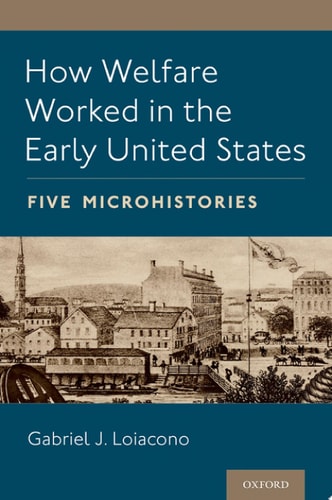
How Welfare Worked in the Early United States: Five Microhistories
0
0
As an Amazon Associate and affiliate partner, Menrva Books earns from qualifying purchases. Learn more
Author Description
What was American welfare like in George Washington's day? It was expensive, extensive, and run by local governments. Known as "poor relief," it included what we would now call welfare and social work. Unlike other aspects of government, poor relief remained consistent in structure between the establishment of the British colonies in the 1600s and the New Deal of the 1930s. In this book, Gabriel J. Loiacono follows the lives of five people in Rhode Island between the Revolutionary War and 1850: a long-serving overseer of the poor, a Continental Army veteran who was repeatedly banished from town, a nurse who was paid by the government to care for the poor, an unwed mother who cared for the elderly, and a paralyzed young man who attempted to become a Christian missionary from inside of a poorhouse. Of Native, African, and English descent, these five Rhode Islanders utilized poor relief in various ways. Tracing their involvement with these programs, Loiacono explains the importance of welfare through the first few generations of United States history. In Washington's day, poor relief was both generous and controlling. Two centuries ago, Americans paid for--and many relied on--an astonishing governmental system that provided food, housing, and medical care to those in need. This poor relief system also shaped American households and dictated where Americans could live and work. Recent generations have assumed that welfare is a new development in the United States. This book shows how old welfare is in the United States of America through five little-known, but compelling, life stories.
Menrva's Summary
THE THESIS
How did the early American welfare system function and influence the lives of citizens during the nation's formative years? Gabriel J. Loiacono, a historian specializing in early American social structures, investigates the consistency of "poor relief" systems from the colonial era through the early 19th century. By analyzing the administrative and personal realities of these programs, the author argues that welfare was a pervasive, controlling, and essential component of early American governance that shaped household dynamics and social mobility long before the modern era.
THE SCOPE MAP
What You Will Find
- Detailed examination of poor relief administration in Rhode Island between the Revolutionary War and 1850.
- Five distinct microhistories featuring individuals of Native, African, and English descent.
- Analysis of the intersection between government policy and the lives of veterans, unwed mothers, and the disabled.
- Historical evidence demonstrating the long-term structural consistency of welfare programs prior to the New Deal.
THE AUTHORITY PERSPECTIVE
Historians and scholars of early American social policy recognize this work as a significant contribution to the understanding of pre-industrial welfare systems. Readers frequently note the accessibility of the microhistorical approach, which effectively grounds abstract policy discussions in the lived experiences of marginalized populations.
Page Count:
245
Publication Date:
2021-01-01
Publisher:
Oxford University Press
ISBN-10:
0197515452
ISBN-13:
9780197515457
History
American History
Special Topics
Social History
Sociology
Introduction to Social WorkWelfare
Community Tags
Similar Books














