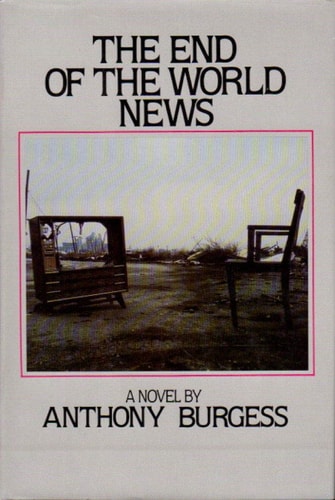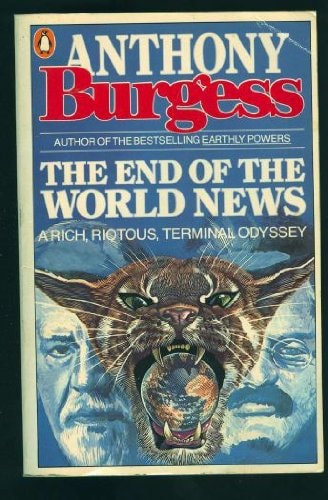
The End of the World News: An Entertainment
0
0
As an Amazon Associate and affiliate partner, Menrva Books earns from qualifying purchases. Learn more
Author Description
A futuristic account of the world's end is composed of three narrative strands presented as if viewed simultaneously, featuring historical and fictional figures, and shifting from New York, to Vienna, to outer space
Menrva's Summary
THE PULSE
A rogue planet hurtles toward Earth, triggering a simultaneous collapse of civilization across three distinct, parallel realities. Anthony Burgess constructs a narrative framework where three separate stories unfold in tandem: a television news broadcast covering the impending apocalypse, a historical account of Sigmund Freud’s final days in Vienna, and a science fiction chronicle of a space mission seeking a new home for humanity. The protagonist in each strand faces the existential weight of an ending world, whether through the lens of media sensationalism, psychological introspection, or the cold logistics of interstellar survival. These threads intersect to examine how humanity processes catastrophe through art, science, and myth.
INSIDE THE PAGES
- Triple-narrative structure presented as simultaneous events
- Integration of historical figures such as Sigmund Freud
- Satirical critique of television news and mass media
- Exploration of the intersection between science and theology
- Non-linear progression across disparate settings
- Meta-fictional commentary on the nature of entertainment
- Philosophical inquiry into the inevitability of extinction
- Stylistic shifts between journalistic, biographical, and speculative prose
THE COLLECTIVE ECHO
Discussion often centers on the ambitious structural design of the novel, which challenges readers to synthesize three disparate genres into a single coherent experience. Readers frequently highlight the contrast between the clinical, detached tone of the news segments and the more intimate, psychological depth found in the historical sections. Critics often note that the work serves as a commentary on the trivialization of disaster in the modern media age. The pacing is described as deliberate, requiring active engagement to track the thematic resonances between the three timelines. Many observers appreciate the intellectual rigor Burgess applies to the concept of the apocalypse, viewing it as a meditation on human legacy rather than a standard disaster narrative.
Page Count:
400
Publication Date:
1984-06-05
Publisher:
Penguin Books
ISBN-10:
0140067469
ISBN-13:
9780140067460
Dystopian
Science Fiction
Satire
Experimental
Apocalyptic