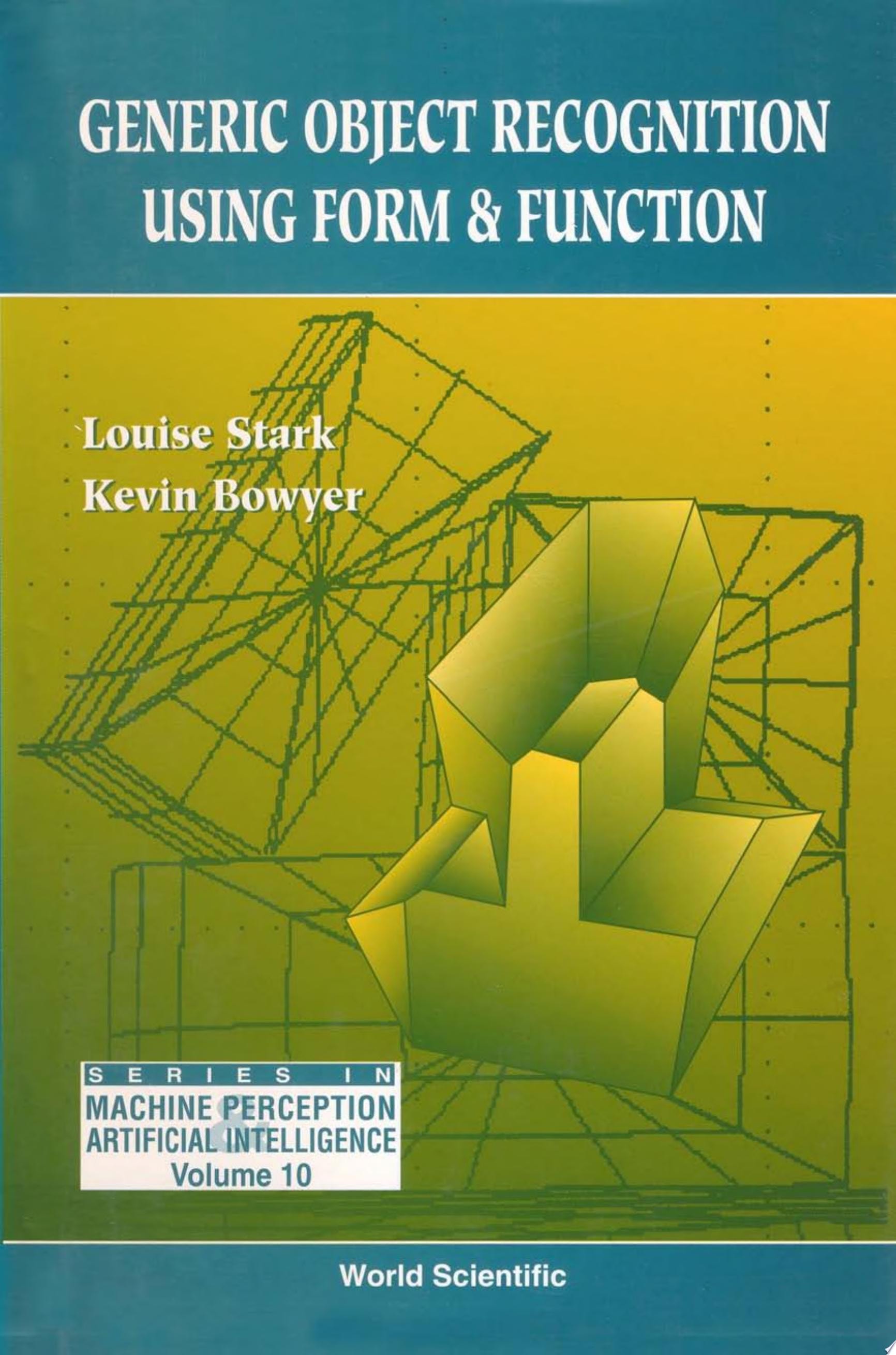
Generic Object Recognition Using Form And Function
0
0
As an Amazon Associate and affiliate partner, Menrva Books earns from qualifying purchases. Learn more
Author Description
This monograph provides a detailed record of the “GRUFF” research project. The goal of the GRUFF project is to develop techniques for robotic vision systems to recognize objects by reasoning about their intended function rather than matching to a pre-defined database of 2-D object appearances or 3-D object shapes. The contributions of this work are: a demonstration of the feasibility of the “form and function” approach to reasoning about 3-D shapes; a demonstration of the concept of using a small number of knowledge primitives as component building blocks in creating a function-based definition of an object category; and an indexing mechanism to make processing for recognition more efficient without any substantial decrease in correctness of classification. Results are given for the analysis of over 500 3-D shape descriptions created with a solid modeling tool and over 200 shape descriptions extracted from real laser range finder images.
Menrva's Summary
THE THESIS
The GRUFF project investigates a novel approach to robotic vision, focusing on recognizing objects by their intended function rather than by matching pre-defined databases of appearances. This monograph details the project's contributions, including the feasibility of a 'form and function' method for reasoning about 3D shapes and the use of knowledge primitives for defining object categories based on function. It also presents an efficient indexing mechanism designed to improve recognition processing speed without compromising classification accuracy. The research is validated through analysis of over 500 3D shape descriptions from a solid modeling tool and more than 200 descriptions derived from real laser range finder images.
THE SCOPE MAP
- A detailed record of the GRUFF research project.
- Techniques for robotic vision systems to recognize objects by reasoning about intended function.
- Demonstration of the feasibility of the 'form and function' approach to reasoning about 3D shapes.
- Concept of using a small number of knowledge primitives as component building blocks for function-based object category definitions.
- An indexing mechanism for efficient recognition processing.
- Results from the analysis of over 500 3D shape descriptions created with a solid modeling tool.
- Results from the analysis of over 200 shape descriptions extracted from real laser range finder images.
THE AUTHORITY PERSPECTIVE
The GRUFF project's monograph presents a significant exploration into functional reasoning for object recognition in robotics. The work details a novel approach that moves beyond traditional appearance-based matching, offering a framework for understanding object categories through their intended use. The inclusion of specific results from both synthetic and real-world data demonstrates the practical applicability and efficiency of the proposed methods. This research provides a valuable contribution to the field of computer vision and artificial intelligence, particularly for systems requiring sophisticated object understanding.
Page Count:
152
Publication Date:
1996-02-29
Publisher:
World Scientific
ISBN-10:
9814502847
ISBN-13:
9789814502849
Non-Fiction
Science
Computer Vision
Computer Science
Robotics
Community Tags
Similar Books