
Romola
0
0
As an Amazon Associate and affiliate partner, Menrva Books earns from qualifying purchases. Learn more
Author Description
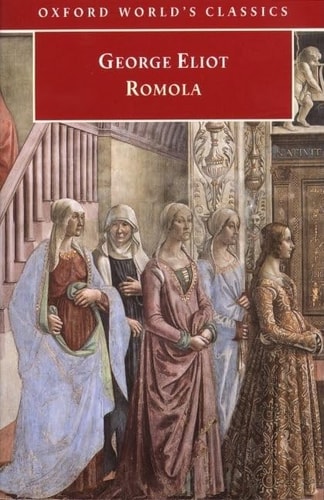
Ramola always occupied a special place in George Eliot's own affections, Looking back at the end of her career she remarked 'I felt some wonder that anyone should think I had written anything better'. The copy text for the Clarendon edition is the serialization in the Cornhill Magazine (July 1862-August 1863), emended to incorporate authorial revisions in the first edition in book form (1863), the Illustrated edition (1865), and the setting copy and proofs of the Cabinet edition (1877-8). A number of manuscript readings are also restored, where it seems likely that the Cornhill compositor misread the handwriting. Changes and deletions in the manuscript are recorded in the apparatus, along with rejected variants from post-Cornhill printings. Drawings on George Eliot's unpublished journals and notebooks, the introduction gives a comprehensive account of the genesis, composition, and publishing history of the novel: her two visits to Florence; her prodigious preparatory research before she began writing; her negotiations with the publisher George Smith, who offered her the astonishing sum of 10,000 pounds for the book; her correspondence with Frederic Leighton, who illustrated the novel for the Cornhill; and the persistent ill-health and depression that afflicted her throughout the period of composition. Since its first appearance, Romola has perplexed many of George Eliot's admirers by the range and density of its historical references. Here, in a series of unusually extensive notes, the sources of these allusion are traced and their significance explained. The result is to re-establish the novel as one of the very greatest of her artistic accomplishments - in Henry James's words, 'on the whole the finest thing she wrote'.
Page Count:
688
Publication Date:
1993-01-01
Publisher:
Clarendon Press
ISBN-10:
0198125941
Fiction psychological
Italy
Community Tags
Other Editions(15)






Similar Books




Reader Comments
Share Your Thoughts
No comments yet. Be the first to share your thoughts!