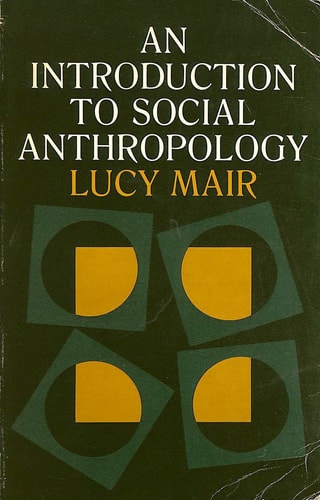
An Introduction to Social Anthropology
0
0
As an Amazon Associate and affiliate partner, Menrva Books earns from qualifying purchases. Learn more
Author Description
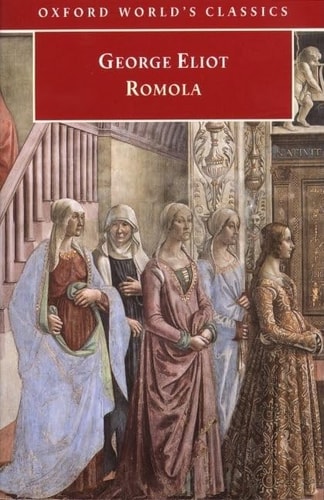
Set in late fifteenth-century Italy, in the Renaissance Florence of Machiavelli and the Medicis, Romola (1862-3) is the most exotic and adventurous of George Eliot's novels. It charts the career and martyrdom of the charismatic religious leader Savonarola, who rebelled against the humanist spirit of the age and burned books on a "bonfire of vanities." With this story, Eliot brilliantly reconstructs in vivid detail a turning-point in the intellectual history of Europe. Eliot's own favorite among her novels, this edition's notes supply biographical information on the numerous historical figures in the novel, identify quotations and often difficult allusions, and give translations of all Italian words and phrases.
Menrva's Summary
THE THESIS
This text investigates the fundamental structures of human social organization and the comparative study of diverse cultural practices. Lucy Mair, a prominent social anthropologist, utilizes her extensive field experience and academic background to provide a comprehensive framework for understanding how societies function. The book argues that social institutions—such as kinship, marriage, and political systems—are not arbitrary but serve specific roles in maintaining social cohesion and order.
THE SCOPE MAP
What You Will Find
- Analysis of kinship systems and family structures
- Examination of political organization in stateless societies
- Discussion of economic exchange and social stratification
- Comparative studies of religious and ritual practices
Scope Limits
- Does not provide an exhaustive history of anthropological theory
- Focuses primarily on traditional societies rather than contemporary urban industrial settings
THE AUTHORITY PERSPECTIVE
Experts recognize this work as a foundational introductory text that remains highly regarded for its clarity and logical structure. Readers frequently note the academic density of the prose, which serves as a standard reference for students beginning their study of social anthropology.
Page Count:
656
Publication Date:
1972-01-01
Publisher:
Oxford University Press
ISBN-10:
0192835688
ISBN-13:
9780192835680
Academic
Anthropology
Social Science
Italy
Fiction psychological
Sociology