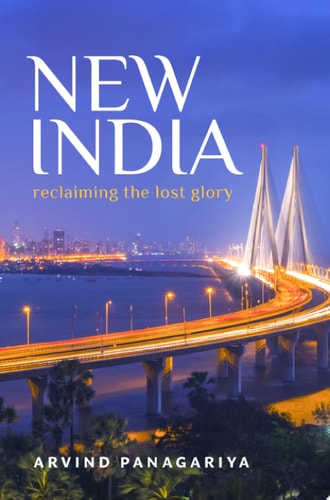
New India: Reclaiming the Lost Glory
0
0
As an Amazon Associate and affiliate partner, Menrva Books earns from qualifying purchases. Learn more
Author Description
With A Gdp That Just Reached $2.6 Trillion, India Is Poised To Become The World's Third Largest Economy In Less Than A Decade. In Doing So, It Will Have Moved One Step Closer To Reclaiming Its Pre-industrial Glory When It Accounted For One-sixth Of The Global Output And Ranked Second In Economic Size. This Rapid Movement In The Absolute Size Of The Economy Will Be Insufficient, However, To Bring Prosperity To India's Vast Population. Today, 44% Of The Country's Workforce Remains In Agriculture And Another 42% In Small Enterprises With Fewer Than Twenty Workers. Labor Productivity Of Both Sets Of Workers Remains Low And They Live Overwhelmingly On Subsistence-level Incomes. In New India: Reclaiming The Lost Glory, Arvind Panagariya Outlines A Concise Strategy To Transform India From A Primarily Rural And Agricultural Economy To An Urban And Industrial Economy With Well-paid Jobs For Those With Limited Skills. Panagariya Argues That The Creation Of Good Jobs Requires The Emergence Of Medium And Large Enterprises In Industry And Services, Especially Labor-intensive Sectors Such As Apparel, Footwear, And Other Light Manufactures. He Explains That India Needs Policies Conducive To The Growth Of Firms From Small To Medium, Medium To Large, And Large To Larger Still. Such Policies Include Greater Outward Orientation; More Flexible Land, Labor, And Capital Markets; Concerted Effort To Improve The Quality Of Higher Education; Faster Urbanization; And Improved Governance At All Levels. Written By A Preeminent Authority On The Indian Economy, New India: Reclaiming The Lost Glory Provides A Data-driven And Persuasive Roadmap For India To Eliminate Abject Poverty, Accelerate Economic Growth, And Return To Its Historically Prominent Position In The Global Economy.
Menrva's Summary
THE THESIS
Can India successfully transition from a rural, agriculture-dependent economy to a global industrial powerhouse capable of eliminating poverty? Arvind Panagariya, a distinguished economist and former Vice Chairman of the NITI Aayog, utilizes extensive macroeconomic data and historical analysis to argue that India's future prosperity hinges on the rapid expansion of labor-intensive manufacturing. He posits that current structural inefficiencies, particularly the over-reliance on subsistence agriculture and small-scale enterprises, must be addressed through aggressive policy reforms to foster large-scale industrial growth.
THE SCOPE MAP
What You Will Find
- Analysis of India's current economic structure, including workforce distribution across agriculture and small enterprises.
- A strategic framework for transitioning to an urban, industrial-led economy.
- Policy recommendations regarding land, labor, and capital market flexibility.
- Evaluation of the role of higher education, urbanization, and governance in long-term economic development.
THE AUTHORITY PERSPECTIVE
Experts recognize this work as a significant contribution to the discourse on Indian economic reform, noting its clear, data-driven approach to complex structural issues. Readers frequently highlight the author's pragmatic focus on labor-intensive sectors as a realistic pathway for national development.
Page Count:
0
Publication Date:
2020-01-01
Publisher:
Oxford University Press
ISBN-10:
0197531563
ISBN-13:
9780197531563
Economics
History
Business
Development
Public Policy
India