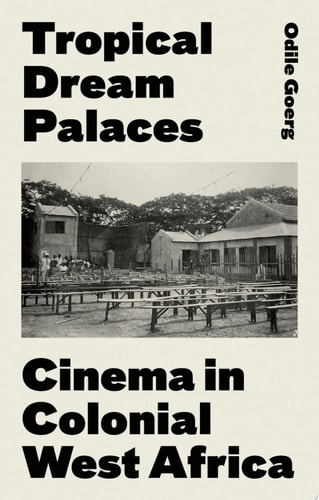
Tropical Dream Palaces: Cinema in Colonial West Africa
0
0
As an Amazon Associate and affiliate partner, Menrva Books earns from qualifying purchases. Learn more
Author Description
Many studies focus on film in Africa. Few, however, study cinema as a leisure activity: one that has influenced several generations and opened up spaces to dream, discuss or contest. Movie theatres offered a break from the daily routine, as places of escape and of education. Cinema was also potentially subversive, offering an alternative to colonial discourse. Tropical Dream Palaces seeks to trace this history in a West African context: of broadening horizons on the one hand, and of censorship and control on the other. It fills a historiographic void, following cinema's arrival in the region in the early twentieth century up until the Independence era, and also looking further afield to Central Africa and its different models. Goerg addresses questions of film distribution in colonial times; of screening venues, their implantation, spread and different categories; while also focusing on audiences, their gender or age; the acquisition of a film culture; and the impact of screening foreign images. Her book draws on extremely varied sources to paint a broad picture of this cinematographic landscape: archives, the accounts of African and European spectators or administrators, novels, autobiographies, the local press, interviews and iconography.
Menrva's Summary
THE THESIS
This work investigates the role of cinema as a social and cultural institution in colonial West Africa, examining how movie theaters functioned as spaces for both leisure and political contestation. Odile Goerg, a specialist in African history, utilizes a diverse array of archival materials, personal accounts, and media records to reconstruct the cinematic landscape of the region. She argues that the introduction of film served as a dual mechanism, acting simultaneously as a tool for colonial control and censorship while providing African audiences with a subversive window into alternative worldviews.
THE SCOPE MAP
What You Will Find
- A historical analysis of film distribution and exhibition networks from the early twentieth century through the Independence era.
- An examination of the social demographics of cinema-goers, including the influence of gender and age on film consumption.
- A synthesis of primary source evidence including colonial administrative records, local press, autobiographies, and iconography.
- A comparative look at the different models of cinema implantation in West and Central Africa.
THE AUTHORITY PERSPECTIVE
Scholars recognize this text as a significant contribution to the historiography of African media, filling a notable gap regarding the social history of film exhibition. Readers frequently note the meticulous use of varied source materials to provide a comprehensive view of the colonial cinematographic experience.
Page Count:
262
Publication Date:
2020-01-01
Publisher:
Oxford University Press
ISBN-10:
0197530966
ISBN-13:
9780197530962
History
Cultural History
African history
Colonialism
Film Studies
Community Tags
Similar Books