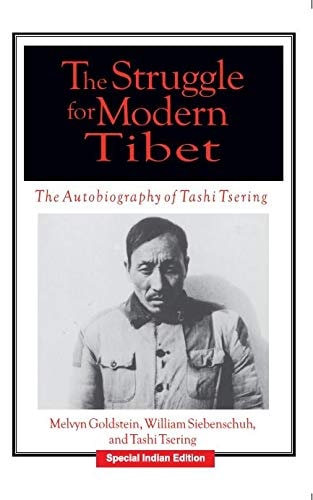
The Struggle for Modern Tibet: The Autobiography of Tashi Tsering
0
0
As an Amazon Associate and affiliate partner, Menrva Books earns from qualifying purchases. Learn more
Author Description
This captivating autobiography by a Tibetan educator and former political prisoner is full of twists and turns. Born in 1929 in a Tibetan village, Tsering developed a strong dislike of his country's theocratic ruling elite. As a 13-year-old member of the Dalai Lama's personal dance troupe, he was frequently whipped or beaten by teachers for minor infractions. A heterosexual, he escaped by becoming a drombo, or homosexual passive partner and sex-toy, for a well-connected monk. After studying at the University of Washington, he returned to Chinese-occupied Tibet in 1964, convinced that Tibet could become a modernized society based on socialist, egalitarian principles only through cooperation with the Chinese. Denounced as a 'counterrevolutionary' during Mao's Cultural Revolution, he was arrested in 1967 and spent six years in prison or doing forced labor in China. Officially exonerated in 1978, Tsering became a professor of English at Tibet University in Lhasa. He now raises funds to bui
Menrva's Summary
THE THESIS
The Struggle for Modern Tibet details the extraordinary life of Tashi Tsering, a Tibetan educator and former political prisoner. Born in 1929, Tsering's early life was marked by a deep-seated dislike for Tibet's theocratic elite and harsh discipline within its institutions. His narrative follows his complex journey from a young dancer in the Dalai Lama's troupe, through a period of survival involving a strategic homosexual partnership, to his education in the United States and subsequent return to Chinese-occupied Tibet with a vision for modernization through cooperation with China. The book chronicles his denunciation and imprisonment during the Cultural Revolution, his eventual exoneration, and his later career as a professor.
THE SCOPE MAP
- An account of Tashi Tsering's birth and upbringing in a Tibetan village in 1929.
- Details of his experiences as a member of the Dalai Lama's personal dance troupe and the harsh educational system.
- His strategic decision to enter into a partnership to escape his circumstances.
- His academic pursuits at the University of Washington.
- His return to Tibet in 1964 with socialist and egalitarian ideals for modernization.
- His arrest and six-year imprisonment during China's Cultural Revolution.
- His exoneration and subsequent career as an English professor at Tibet University.
THE AUTHORITY PERSPECTIVE
This autobiography offers a unique firsthand account of a tumultuous period in Tibetan history, viewed through the eyes of an individual deeply embedded within its social and political structures. The narrative promises a complex exploration of identity, ideology, and survival, detailing Tsering's evolving perspectives on Tibetan society and its relationship with China. The book's reception is likely to center on its candid portrayal of personal hardship and its insights into the socio-political landscape of Tibet during the mid to late 20th century.
Page Count:
218
Publication Date:
2018-01-01
Publisher:
Routledge (Distributed exclusively by Dev Publishers & Distributors)
ISBN-10:
1138328987
ISBN-13:
9781138328983
Biography
Autobiography
History
Politics
Non-Fiction
Community Tags
Similar Books