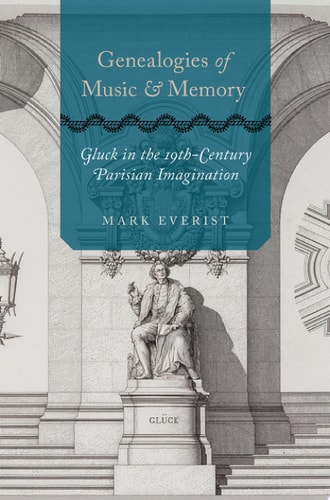
Genealogies of Music and Memory: Gluck in the 19th-Century Parisian Imagination
0
0
As an Amazon Associate and affiliate partner, Menrva Books earns from qualifying purchases. Learn more
Author Description
The history of music is most often written as a sequence of composers and works. But a richer understanding of the music of the past may be obtained by also considering the afterlives of a composer's works. Genealogies of Music and Memory asks how the stage works of Christoph Willibald Gluck (1714-87) were cultivated in nineteenth-century Paris, and concludes that although the composer was not represented formally on the stage until 1859, his music was known from a wide range of musical and literary environments. Received opinion has Hector Berlioz as the sole guardian of the Gluckian flame from the 1820s onwards, and responsible -- together with the soprano Pauline Viardot -- for the 'revival' of the composer's Orfeo in 1859. The picture is much clarified by looking at the concert performances of Gluck during the first two thirds of the nineteenth century, and the ways in which they were received and the literary discourses they engendered. Coupled to questions of music publication, pedagogy, and the institutional status of the composer, such a study reveals a wide range of individual agents active in the promotion of Gluck's music for the Parisian stage. The 'revival' of Orfeo is contextualised among other attempts at reviving Gluck's works in the 1860s, and the role of Berlioz, Viardot and a host of others re-examined.
Menrva's Summary
THE THESIS
This book investigates how the stage works of Christoph Willibald Gluck were maintained and transformed within the cultural landscape of nineteenth-century Paris. Mark Everist, a distinguished musicologist, utilizes a broad array of archival evidence, including concert programs, pedagogical materials, and literary criticism, to challenge the traditional narrative that Hector Berlioz acted as the sole custodian of Gluck's legacy. By examining the institutional and individual agents involved in the promotion of Gluck's music, the author constructs a complex framework that moves beyond a simple composer-centric history to explore the multifaceted afterlife of musical works.
THE SCOPE MAP
What You Will Find
- Analysis of concert performances and musical reception in Paris from 1800 to 1870.
- Examination of the role of music publication and pedagogy in shaping the composer's reputation.
- Investigation into the collaborative efforts of figures like Pauline Viardot and Hector Berlioz.
- Contextualization of the 1859 revival of Orfeo within broader nineteenth-century performance trends.
THE AUTHORITY PERSPECTIVE
Scholars in the field of musicology recognize this work as a significant contribution to the study of reception history and nineteenth-century French musical culture. Readers frequently note the meticulous archival research and the author's ability to synthesize diverse cultural discourses into a coherent historical argument.
Page Count:
226
Publication Date:
2021-01-01
Publisher:
Oxford University Press
ISBN-10:
0197546021
ISBN-13:
9780197546024
Biography
19th Century
Cultural History
Musicology
Humanities
Music History
Criticism history
Paris
Community Tags
Similar Books