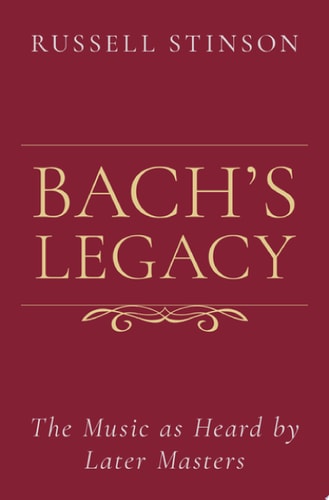
Bach's Legacy: The Music as Heard by Later Masters
0
0
As an Amazon Associate and affiliate partner, Menrva Books earns from qualifying purchases. Learn more
Author Description
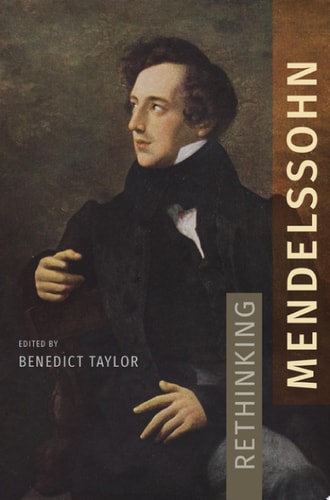
Johann Sebastian Bach's legacy is undeniably one of the richest in the history of music, with a vast influence on posterity that has only grown since his rediscovery in the early nineteenth century. In this latest addition to his long list of Bach studies, renowned Bach scholar Russell Stinson examines how four of the greatest composers of the nineteenth and twentieth centuries - Felix Mendelssohn, Robert Schumann, Richard Wagner, and Edward Elgar - engaged with Bach's legacy, not only as composers per se, but also as performers, conductors, scholars, critics, and all-around musical ambassadors. Detailed analyses of both musical and epistolary sources shed light on how these later masters heard and received Bach's music within their musical circles, while colorful anecdotes about their Bach reception help humanize them, reconstructing the intimate social circumstances in which they performed and discussed Bach's music. Stinson focuses on Mendelssohn's and Schumann's reception of Bach's organ works, Schumann's encounter with the St. Matthew and St. John Passions, Wagner's musings on the Well-Tempered Clavier, and Elgar's (resoundingly negative) thoughts on Bach as a vocal composer. Engagingly written, copiously annotated, and thoroughly up to date, Bach's Legacy traces the historical afterlife of Bach's music and offers fascinating insights into how these later masters defined it for their audiences and beyond.
Menrva's Summary
THE THESIS
This book investigates the specific ways in which four influential composers—Felix Mendelssohn, Robert Schumann, Richard Wagner, and Edward Elgar—interpreted and integrated the music of Johann Sebastian Bach into their own creative and professional lives. Russell Stinson, a recognized authority in Bach studies, utilizes a combination of musical scores, personal correspondence, and historical accounts to construct a detailed reception history. The work argues that these later masters acted as critical intermediaries who shaped the public and academic understanding of Bach's compositions during the nineteenth and twentieth centuries.
THE SCOPE MAP
What You Will Find
- Comparative analysis of Bach's influence on Mendelssohn, Schumann, Wagner, and Elgar
- Examination of Bach's organ works, the Passions, and the Well-Tempered Clavier
- Integration of primary source letters and contemporary critical writings
- Historical context regarding the nineteenth-century rediscovery of Bach
Scope Limits
- Does not provide a comprehensive biography of Bach himself
- Focuses primarily on the four selected composers rather than a global history of Bach reception
THE AUTHORITY PERSPECTIVE
Scholars and musicologists frequently cite this text as a rigorous contribution to the field of reception history, noting its balance of technical musical analysis and historical narrative. Experts highlight the book's value in documenting the evolution of Bach's reputation through the specific lenses of his most prominent successors.
Page Count:
187
Publication Date:
2020-01-01
Publisher:
Oxford University Press
ISBN-10:
019009124X
ISBN-13:
9780190091248
Biography
Cultural History
Musicology
Music History
Criticism history
Humanities
Community Tags
Similar Books