Taking Stock of Shock: Social Consequences of the 1989 Revolutions
0
0
As an Amazon Associate and affiliate partner, Menrva Books earns from qualifying purchases. Learn more
Author Description
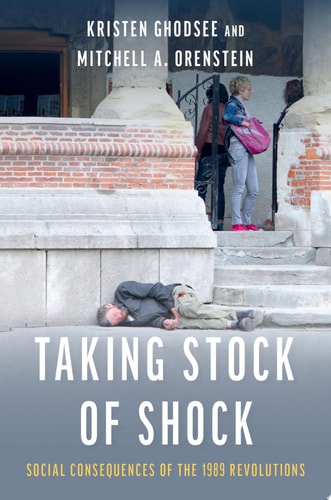
Kristen Ghodsee and Mitchell A. Orenstein blend empirical data with lived experiences to produce a robust picture of who won and who lost in post-communist transition, contextualizing the rise of populism in Eastern Europe. After the fall of the Berlin Wall in 1989, more than 400 million people suddenly found themselves in a new reality, a dramatic transition from state socialist and centrally planned workers' states to liberal democracy (in most cases) and free markets. Thirty years later, postsocialist citizens remain sharply divided on the legacies of transition. Was it a success that produced great progress after a short recession, or a socio-economic catastrophe foisted on the East by Western capitalists? Taking Stock of Shock aims to uncover the truth using a unique, interdisciplinary investigation into the social consequences of transition—including the rise of authoritarian populism and xenophobia. Showing that economic, demographic, sociological, political scientific, and ethnographic research produce contradictory results based on different disciplinary methods and data, Kristen Ghodsee and Mitchell Orenstein triangulate the results. They find that both the J-curve model, which anticipates sustained growth after a sharp downturn, and the "disaster capitalism" perspective, which posits that neoliberalism led to devastating outcomes, have significant basis in fact. While substantial percentages of the populations across a variety of postsocialist countries enjoyed remarkable success, prosperity, and progress, many others suffered an unprecedented socio-economic catastrophe. Ghodsee and Orenstein conclude that the promise of transition still remains elusive for many and offer policy ideas for overcoming negative social and political consequences.
Menrva's Summary
THE THESIS
This book investigates the divergent socio-economic outcomes of the 1989 revolutions in Eastern Europe to determine whether the transition to liberal democracy and free markets was a success or a catastrophe. Authors Kristen Ghodsee and Mitchell A. Orenstein utilize their expertise in ethnography and political science to synthesize contradictory data sets from various disciplines. By triangulating economic growth models with lived experiences, they provide a framework for understanding the rise of populism and the uneven distribution of prosperity in the post-socialist era.
THE SCOPE MAP
What You Will Find
- Comparative analysis of post-1989 economic transitions across Eastern Europe.
- Evaluation of the J-curve growth model versus the disaster capitalism perspective.
- Integration of quantitative economic data with qualitative ethnographic research.
- Policy recommendations aimed at addressing the lingering social and political consequences of the transition.
THE AUTHORITY PERSPECTIVE
Experts highlight this work as a necessary interdisciplinary synthesis that bridges the gap between macroeconomic data and the lived realities of citizens. Readers frequently note the clarity with which the authors navigate complex political debates, making it a foundational text for those studying the long-term impacts of the fall of state socialism.
Page Count:
298
Publication Date:
2021-01-01
Publisher:
Oxford University Press
ISBN-10:
0197549268
ISBN-13:
9780197549261
History
Economics
Sociology
Economic History
Eastern Europe
Post-communism
Comparative Politics
Community Tags
Similar Books