Evolution of a Taboo: Pigs and People in the Ancient Near East
0
0
As an Amazon Associate and affiliate partner, Menrva Books earns from qualifying purchases. Learn more
Author Description
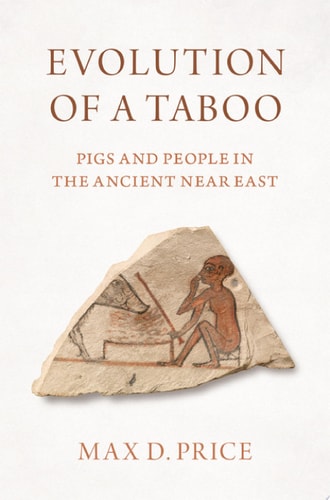
Pigs are among the most peculiar animals domesticated in the Ancient Near East. Their story, from domestication to taboo, has fascinated historians, archaeologists, and religious studies scholars for decades. Rejecting simple explanations, this book adopts an evolutionary approach that relies on zooarchaeology and texts to unravel the cultural significance of swine in the Near East from the Paleolithic to the present day. Five major themes are covered: The domestication of the pig from wild boars in the Neolithic period, the unique roles that pigs developed in agricultural economies before and after the development of complex societies, the raising of swine in cities, the shifting ritual roles of pigs, and the formation and development of the pork taboo in Judaism and, later, Islam. The origins and significance of this taboo have inspired much debate. Evolution of a Taboo contends that the well-known taboo described in Leviticus evolved over time, beginning with conflicts between Israelites and Philistines in the early part of the Iron Age, and later was mobilized by Judah's priestly elite in the writing of the Biblical texts. Centuries later, the pig taboo became a point of contention in the ethno-political struggles between Jewish and Greco-Roman cultures in the Levant; later still, between Jews, Christians, and Muslims. Through these conflicts, the pig taboo grew in power. As this rich account illustrates, it came to define the relations between pigs and people in the Near East and beyond, up to the present day.
Menrva's Summary
THE THESIS
This book investigates the complex evolutionary trajectory of the pig in the Ancient Near East, specifically seeking to explain how and why the animal transitioned from a common agricultural resource to a profound cultural and religious taboo. Max D. Price, an expert in zooarchaeology, utilizes a multidisciplinary framework that synthesizes archaeological data, faunal remains, and historical texts. He argues against simplistic environmental or health-based explanations for the pork taboo, proposing instead that the prohibition emerged from long-term socio-political conflicts and identity formation among the peoples of the Levant.
THE SCOPE MAP
What You Will Find
- Analysis of pig domestication from wild boars during the Neolithic period.
- Examination of swine management within early agricultural economies and urban centers.
- Integration of zooarchaeological evidence and biblical textual analysis.
- A historical timeline tracing the development of the pork taboo from the Iron Age through the rise of Judaism, Christianity, and Islam.
THE AUTHORITY PERSPECTIVE
Scholars and historians recognize this work as a significant contribution to the study of ancient dietary laws and cultural identity. Readers frequently note the academic density of the prose, which effectively bridges the gap between specialized archaeological research and broader historical inquiry.
Page Count:
336
Publication Date:
2020-01-01
Publisher:
Oxford University Press
ISBN-10:
0197543294
ISBN-13:
9780197543290
Religion
History
Manners and customs
Archaeology
History - Ancient
Zoology
Food Habits
Anthropology
Swine
Ancient History
Taboo
Mammal remains Archaeology
Community Tags
Similar Books