Full Fathom 5000: The Expedition of the HMS Challenger and the Strange Animals It Found in the Deep Sea
0
0
As an Amazon Associate and affiliate partner, Menrva Books earns from qualifying purchases. Learn more
Author Description
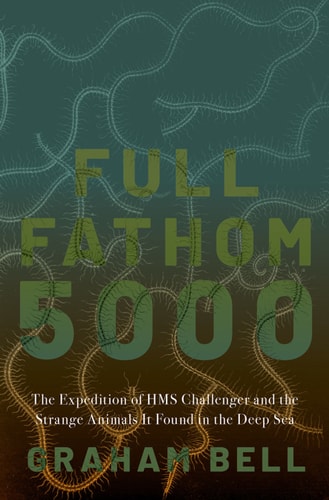
The deep sea covers more than half the surface of the Earth, but until the circumnavigation made by the HMS Challenger almost nothing was known about the animals that live there. Full Fathom 5000 gives an account of the remarkable discoveries that were made during the voyage and describes the strange and bizarre creatures that live in perpetual darkness a kilometer or more below the surface of the sea. Until the early 1870s, very little was known about the creatures lurking in the depths of our oceans. People had found a few things trapped in fishing gear or caught on the anchors of ships, but those who tried to venture to the bottom of the seafloor often died before they made it there. The first systematic investigation into life in our oceans was made during the circumnavigation of the HMS Challenger. Scientists credit this voyage as the beginning of modern oceanography, and the story of it is full of twists and turns. It led to the discovery of a whole new fauna previously unknown, which Full Fathom 5000 describes for the first time in one place for readers. In this book, Graham Bell takes readers through the voyage station by station, following the progress of the expedition and introducing some of the new and strange animals that were hauled up from the depths of the ocean and seen by human eyes for the first time. You will meet, among others, the ugliest fish in the world, flesh-eating clams, dwarf males, sea devils, and an octopus that wears lipstick. The book begins with a description of the first attempts scientists made to explore the deep sea, leading up to the plan for a voyage around the world on the HMS Challenger. The chapters take readers from station to station, though all of the world's oceans, visiting every continent and crossing the Equator five times. Bell details what was discovered during hundreds of stops to take samples, and he describes around a hundred stations where remarkable animals were hauled from the sea.
Menrva's Summary
THE THESIS
This book investigates the historical significance and biological findings of the HMS Challenger expedition, which served as the foundational event for modern oceanography. Graham Bell provides a detailed account of the 1870s circumnavigation, utilizing the expedition's logs and scientific records to document the first systematic exploration of the deep sea. The text argues that this voyage transformed human understanding of marine life by revealing a vast, previously unknown fauna existing in the abyssal zones of the world's oceans.
THE SCOPE MAP
What You Will Find
- A station-by-station analysis of the HMS Challenger's global route across all major oceans.
- Descriptions of unique deep-sea organisms including specialized fish, mollusks, and cephalopods.
- Historical context regarding early scientific attempts to probe the seafloor before the 1870s.
- A chronological record of the expedition's methodology for sampling life at extreme depths.
THE AUTHORITY PERSPECTIVE
Experts recognize this work as a comprehensive synthesis of the Challenger expedition's contributions to marine biology. Readers frequently note the accessible yet detailed nature of the prose, which balances technical biological descriptions with the historical narrative of the voyage.
Page Count:
360
Publication Date:
2022-01-01
Publisher:
Oxford University Press
ISBN-10:
0197541593
ISBN-13:
9780197541593
History
Science
Geology
Earth Sciences
Marine Biology
Oceanography
Exploration
Community Tags
Similar Books