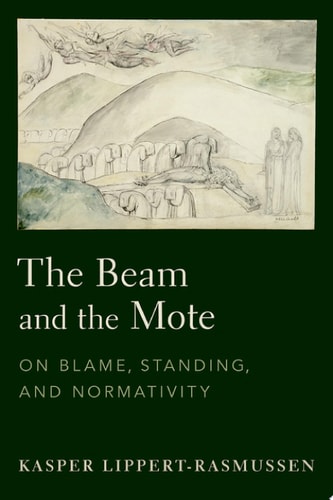
The Beam and the Mote: On Blame, Standing, and Normativity
0
0
As an Amazon Associate and affiliate partner, Menrva Books earns from qualifying purchases. Learn more
Author Description
“Thou hypocrite, first cast out the beam out of thine own eye; and then shalt thou see clearly to cast out the mote out of thy brother's eye” says the Bible. In other words: there is something problematic about one person blaming another, when the blamer's faults are even greater.Many believe that even if one has done something blameworthy, one can dismiss blame when coming from a hypocritical blamer. Kasper Lippert-Rasmussen examines the nature and ethics of standingless, hypocritical blame. It argues that hypocrites lack standing to blame in virtue of their lack of commitment to the norms to which they appeal in their blame; that hypocritical blame is pro tanto morally wrong because it involves treating the blamee as an inferior; and that there are many other sources of lacking standing to blame than hypocrisy, e.g., complicity. Lippert-Rasmussen extrapolates these analyses to other moral responses, notably praising and forgiving. So far, philosophers interested in standing have focused narrowly on blaming, but many other moral responses require standing as well. Indeed, Lippert-Rasmussen argues that considerations about standing apply to illocutionary acts not involving appeals to moral norms, e.g., non-moral encouragements and epistemic blame. In closing, Lippert-Rasmussen uses insights related to the idea of standing as a basis for making a grand claim about how part of morality is interpersonal in a sense often ignored in discussions of mainstream first-order moral theories, and to elucidate the nature of the moral wrong involved in relying on negative statistical generalizations about certain groups of people.
Menrva's Summary
THE THESIS
What are the moral conditions under which an individual possesses the standing to blame, praise, or forgive others? Kasper Lippert-Rasmussen, a professor of political theory, investigates the normative constraints on interpersonal moral responses. He argues that hypocritical blame is morally problematic because it fails to demonstrate commitment to the norms invoked and treats the recipient as an inferior, extending this framework to analyze broader illocutionary acts and statistical generalizations.
THE SCOPE MAP
What You Will Find
- Analysis of the ethics of hypocritical blame and the concept of standing.
- Examination of moral responses beyond blame, including praising and forgiving.
- Application of standing-based frameworks to non-moral encouragements and epistemic blame.
- Exploration of the interpersonal nature of morality and the ethics of negative statistical generalizations.
THE AUTHORITY PERSPECTIVE
Scholars in moral philosophy identify this work as a significant expansion of the literature on standing, which has historically been limited to the study of blame. Readers frequently note the rigorous analytical density of the prose as it bridges the gap between interpersonal ethics and broader normative theory.
Page Count:
272
Publication Date:
2023-01-01
Publisher:
Oxford University Press
ISBN-10:
0197544592
ISBN-13:
9780197544594
Philosophy
Ethics
Social Philosophy
Moral Philosophy
Community Tags
Similar Books