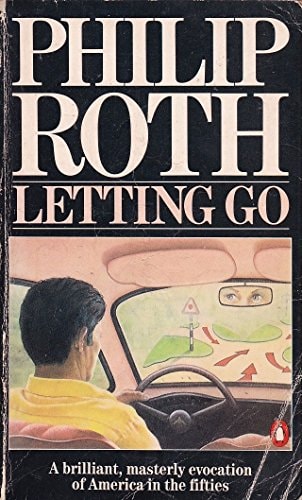
Letting Go
0
0
As an Amazon Associate and affiliate partner, Menrva Books earns from qualifying purchases. Learn more
Author Description
Letting Go is Philip Roth’s first full-length novel, published just after Goodbye, Columbus, when he was twenty-nine. Set in 1950s Chicago, New York, and Iowa City, Letting Go presents as brilliant a fictional portrait as we have of a mid-century America defined by social and ethical constraints and by moral compulsions conspicuously different from those of today. Newly discharged from the Korean War army, reeling from his mother’s recent death, freed from old attachments and hungrily seeking others, Gabe Wallach is drawn to Paul Herz, a fellow graduate student in literature, and to Libby, Paul’s moody, intense wife. Gabe’s desire to be connected to the ordered “world of feeling” that he finds in books is first tested vicariously by the anarchy of the Herzes’ struggles with responsible adulthood and then by his own eager love affairs. Driven by the desire to live seriously and act generously, Gabe meets an impassable test in the person of Martha Reganhart, a spirited, outspoken, divorced mother of two, a formidable woman who, according to critic James Atlas, is masterfully portrayed with “depth and resonance.” The complex liaison between Gabe and Martha and Gabe’s moral enthusiasm for the trials of others are at the heart of this ambitious first novel. “[Roth] has the finest eye for the details of American life since Sinclair Lewis.” — Stanley Edgar Hyman
Menrva's Summary
THE PULSE
Gabe Wallach, a young man navigating the complexities of post-war American life, finds his desire for meaningful connection challenged by the volatile lives of those around him. Seeking to anchor himself after his mother's death and his military service, Gabe becomes entangled in the lives of Paul and Libby Herz, a couple struggling with the burdens of adulthood. The narrative follows Gabe through Chicago, New York, and Iowa City as he attempts to reconcile his intellectual ideals with the messy reality of human relationships. His pursuit of a serious, generous life is further complicated by his intense involvement with Martha Reganhart, a divorced mother who forces him to confront the limitations of his own moral intentions.
INSIDE THE PAGES
- Detailed exploration of 1950s social and ethical constraints
- Focus on the tension between intellectual life and emotional reality
- Character-driven narrative centered on interpersonal dynamics
- Examination of moral responsibility and personal autonomy
- Realistic portrayal of academic and domestic environments
- Introspective protagonist navigating grief and transition
- Complex, multi-layered character relationships
- Meticulous observation of mid-century American cultural norms
THE COLLECTIVE ECHO
Discussion often centers on the novel's ambitious scope and its precise, observant prose that captures the anxieties of the post-war generation. Readers frequently highlight the depth of the characterizations, particularly the portrayal of Martha Reganhart, who is often cited as a standout figure in the narrative. Critics often note the book's focus on the conflict between the desire for a structured life and the inherent chaos of human emotion. The work is widely recognized for its ability to document the specific moral compulsions of the 1950s, providing a window into a world defined by different social expectations than those of the present day.
Page Count:
640
Publication Date:
1984-08-30
Publisher:
Penguin Books Ltd
ISBN-10:
0140062564
ISBN-13:
9780140062564
Literary Fiction
Contemporary
Coming of Age
Contemporary
Classic fiction
Mid-Century American
Community Tags
Other Editions(6)


Similar Books



Reader Comments
Share Your Thoughts
No comments yet. Be the first to share your thoughts!