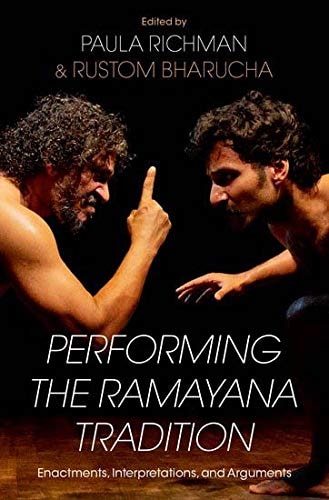
Performing the Ramayana Tradition: Enactments, Interpretations, and Arguments
0
0
As an Amazon Associate and affiliate partner, Menrva Books earns from qualifying purchases. Learn more
Author Description
The Ramayana, one of the two pre-eminent Hindu epics, has played a foundational role in many aspects of India's arts and social norms. For centuries, people learned this narrative by watching, listening, and participating in enactments of it. Although the Ramayana's first extant telling in Sanskrit dates back to ancient times, the story has continued to be retold and rethought through the centuries in many of India's regional languages, such as Hindi, Tamil, and Bengali. The narrative has provided the basis for enactments of its episodes in recitation, musical renditions, dance, and avant-garde performances. This volume introduces non-specialists to the Ramayana's major themes and complexities, as well as to the highly nuanced terms in Indian languages used to represent theater and performance.Two introductions orient readers to the history of Ramayana texts by Tulsidas, Valmiki, Kamban, Sankaradeva, and others, as well as to the dramaturgy and aesthetics of their enactments. The contributed essays provide context-specific analyses of diverse Ramayana performance traditions and the narratives from which they draw. The essays are clustered around the shared themes of the politics of caste and gender; the representation of the anti-hero; contemporary re-interpretations of traditional narratives; and the presence of Ramayana discourse in daily life.
Menrva's Summary
THE THESIS
This volume investigates how the Ramayana epic functions as a dynamic, evolving framework for artistic expression and social discourse across diverse Indian performance traditions. Editors Paula Richman and Rustom Bharucha assemble a collection of scholarly essays that examine the intersection of ancient Sanskrit texts and contemporary regional enactments. By analyzing the interplay between traditional narratives and modern interpretations, the authors argue that the epic remains a vital, contested site for exploring issues of caste, gender, and political identity in South Asia.
THE SCOPE MAP
What You Will Find
- Historical analysis of Ramayana texts by authors including Valmiki, Tulsidas, and Kamban.
- Examination of diverse performance modes such as recitation, dance, musical rendition, and avant-garde theater.
- Critical exploration of thematic clusters including the representation of anti-heroes and the politics of caste and gender.
- Methodological frameworks for understanding Indian dramaturgy and performance aesthetics.
THE AUTHORITY PERSPECTIVE
Scholars and students of South Asian studies frequently cite this volume as a critical resource for understanding the fluidity of epic traditions in modern contexts. The text is noted for its academic rigor and its ability to bridge the gap between classical literary analysis and contemporary performance studies.
Page Count:
376
Publication Date:
2021-06-01
Publisher:
Oxford University Press
ISBN-10:
019755251X
ISBN-13:
9780197552513
Religion
History
Theater
Community Tags
Similar Books