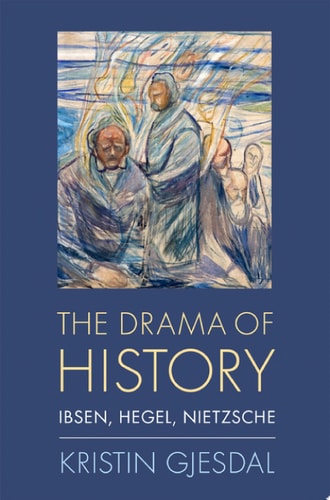
The Drama of History: Ibsen, Hegel, Nietzsche
0
0
As an Amazon Associate and affiliate partner, Menrva Books earns from qualifying purchases. Learn more
Author Description
Henrik Ibsen's plays have long beguiled philosophically-oriented readers. From Nietzsche to Adorno to Cavell, philosophers have drawn inspiration from Ibsen. But what of Ibsen's own philosophical orientation? As part of larger European movements to reinvent drama, Ibsen and fellow playwrights grappled with contemporary philosophy. Philosophy of drama found a central place with figures such as Gotthold Ephraim Lessing and Johann Gottfried Herder, but reached its mature form, in Ibsen's time, in the works of G.W.F. Hegel and Friedrich Nietzsche.Kristin Gjesdal reveals the centrality of philosophy of theater in nineteenth-century philosophy and shows how drama, as an art form, offers insight into human historicity and the conditions of modern life. The Drama of History deepens and actualizes the relationship between philosophy and drama--not by suggesting that either philosophy or drama should have the upper hand, but rather by indicating how a sustained dialogue between them brings out the meaning and intellectual power of each. Her study reveals underappreciated aspects of Hegel's and Nietzsche's works through their reception in European art and investigates the philosophical dimensions of Ibsen's drama. At the heart of this interrelation between philosophy and drama is a shared interest in exploring the existential condition of human life as lived and experienced in history.
Menrva's Summary
THE THESIS
This work investigates the intersection of nineteenth-century philosophy and drama, specifically questioning how the works of Ibsen, Hegel, and Nietzsche inform our understanding of human historicity. Kristin Gjesdal, a scholar of philosophy, examines the intellectual dialogue between playwrights and philosophers during a period of significant cultural reinvention. By analyzing the reception of Hegelian and Nietzschean thought within European theater, the author argues that drama serves as a critical medium for exploring the existential conditions of modern life.
THE SCOPE MAP
What You Will Find
- Analysis of the philosophical underpinnings of Henrik Ibsen's dramatic works
- Re-evaluation of G.W.F. Hegel and Friedrich Nietzsche through the lens of theatrical reception
- Exploration of the concept of human historicity in nineteenth-century European thought
- Examination of the historical development of the philosophy of drama
Scope Limits
- The study does not provide a comprehensive biography of the three central figures
- The analysis does not extend to twentieth-century avant-garde theatrical movements
THE AUTHORITY PERSPECTIVE
Scholars and critics recognize this text as a significant contribution to the study of aesthetics and the history of philosophy. Readers frequently note the academic density of the prose, which is intended for those with a background in continental philosophy and dramatic theory.
Page Count:
246
Publication Date:
2020-12-01
Publisher:
Oxford University Press
ISBN-10:
0190070765
ISBN-13:
9780190070762
Philosophy
History
Drama
Politics
History & Surveys
Modern
Humanities
European History
Literary Criticism
Drama
English
Theater
Literature & Fiction
Criticism history
Theatre
New Used & Rental Textbooks
English & College Success
Theater Studies
Community Tags
Other Editions(2)
Similar Books