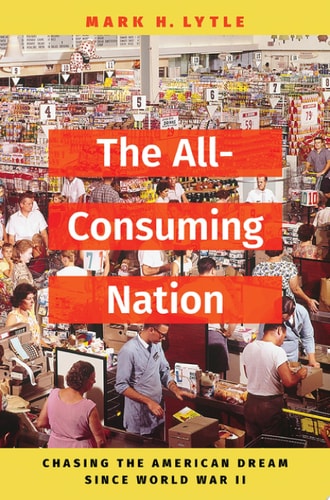
The All-Consuming Nation: Chasing the American Dream Since World War II
0
0
As an Amazon Associate and affiliate partner, Menrva Books earns from qualifying purchases. Learn more
Author Description
In his 1958 "kitchen debate" with Nikita Khrushchev, Richard Nixon argued that the freedom to consume defined the American way of life. High wages, full employment, new technologies, and a rapid growth in population known as the "Baby Boom" ushered in a golden age of economic growth. By the end of the twentieth century, consumerism triumphed over communism, socialism, and all other isms seeking to win hearts and minds around the world. Advertising, popular culture, and mass media persuaded Americans that shopping was both spiritually fulfilling and a patriotic virtue.Mark Lytle argues that Nixon's view of consumer democracy contained fatal flaws -- if unregulated, it would wholly ignore the creativedestruction that, in destroying jobs, erodes the capacity to consume. The All-Consuming Nation also examines how planners failed to take into account the environmental costs, as early warning signs--whether smog over Los Angeles, the overuse of toxic chemicals such as DDT, or the Cuyahoga River in flames--provided evidence that all was not well. Environmentalists from Aldo Leopold, Rachel Carson and Paul Ehrlich to Ralph Nader and Al Gore cautioned that modern consumerism imposed unsustainable costs on the natural world. Not for lack of warning, climate change became the defining issue of the twenty-first century. The All-Consuming Nation investigates the environmental and sociocultural costs of the consumer capitalism framework set in place in the 20th century, shedding light on the consequences of a national identity forged through mass consumption.
Menrva's Summary
THE THESIS
This book investigates the environmental and sociocultural consequences of the consumer capitalism framework that became the defining characteristic of American national identity following World War II. Mark H. Lytle, a historian of American culture, examines the evolution of the "consumer democracy" model championed by figures like Richard Nixon. He argues that this system, while successful in triumphing over competing ideologies, contained inherent flaws that ignored the long-term environmental costs and the destructive economic cycles that eventually eroded the very capacity to consume.
THE SCOPE MAP
What You Will Find
- Analysis of the post-WWII economic boom and the rise of mass consumerism as a patriotic virtue.
- Examination of the environmental warnings issued by figures such as Rachel Carson, Aldo Leopold, and Ralph Nader.
- Investigation into the systemic failures of planners to account for toxic pollution and climate change.
- A critique of the "creative destruction" model and its impact on labor and long-term economic stability.
THE AUTHORITY PERSPECTIVE
Scholars and critics recognize this work as a significant synthesis of environmental history and economic critique. Readers frequently note the clarity with which Lytle connects mid-century political rhetoric to the contemporary climate crisis.
Page Count:
532
Publication Date:
2021-01-01
Publisher:
Oxford University Press
ISBN-10:
0197568270
ISBN-13:
9780197568279
History
Economics
History of the Americas
Consumption Economics
American Studies
Nature
Economic History
Sociology
Consumers
Special Topics
Community Tags
Similar Books