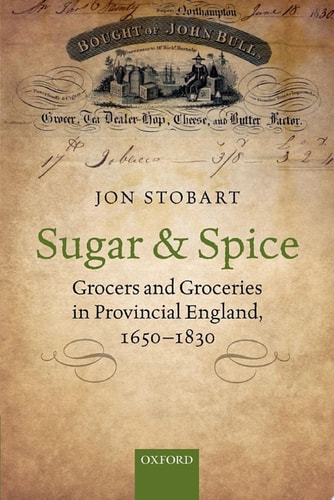
Sugar and Spice: Grocers and Groceries in Provincial England, 1650-1830
0
0
As an Amazon Associate and affiliate partner, Menrva Books earns from qualifying purchases. Learn more
Author Description
Consumers in eighteenth-century England were firmly embedded in an expanding world of goods, one that incorporated a range of novel foods (tobacco, chocolate, coffee, and tea) and new supplies of more established commodities, including sugar, spices, and dried fruits. Much has been written about the attraction of these goods, which went from being novelties or expensive luxuries in the mid-seventeenth century to central elements of the British diet a century or so later. They have been linked to the rise of Britain as a commercial and imperial power, whilst their consumption is seen as transforming many aspects of British society and culture, from mealtimes to gender identity. Despite this huge significance to ideas of consumer change, we know remarkably little about the everyday processes through which groceries were sold, bought, and consumed. In tracing the lines of supply that carried groceries from merchants to consumers, Sugar and Spice reveals how changes in retailing and shopping were central to the broader transformation of consumption and consumer practices, but also questions established ideas about the motivations underpinning consumer choices. It demonstrates the dynamic nature of eighteenth-century retailing; the importance of advertisements in promoting sales and shaping consumer perceptions, and the role of groceries in making shopping an everyday activity. At the same time, it shows how both retailers and their customers were influenced by the practicalities and pleasures of consumption. They were active agents in consumer change, shaping their own practices rather than caught up in a single socially-inclusive cultural project such as politeness or respectability.
Menrva's Summary
THE THESIS
This book investigates the everyday processes of retailing and consumption in provincial England between 1650 and 1830 to determine how groceries became central to the British diet and economy. Jon Stobart, a professor of social history, utilizes archival records, trade advertisements, and supply chain analysis to challenge the notion that consumer change was driven solely by broad cultural shifts. He argues that retailers and customers acted as active, independent agents whose practical decisions and local shopping habits fundamentally shaped the commercial landscape of the era.
THE SCOPE MAP
What You Will Find
- Analysis of supply chains for colonial goods like tea, coffee, sugar, and spices.
- Examination of eighteenth-century retail strategies and advertising techniques.
- Case studies of provincial shopkeepers and their interactions with local customers.
Scope Limits
- The study focuses primarily on provincial England rather than London or international markets.
- It does not provide a comprehensive history of global colonial trade routes.
THE AUTHORITY PERSPECTIVE
Historians and scholars of material culture frequently cite this work for its detailed archival research into the mechanics of early modern retail. Experts highlight the text as a significant contribution to understanding the agency of provincial consumers in the development of British commercial society.
Page Count:
302
Publication Date:
2016-01-01
Publisher:
OUP Oxford
ISBN-10:
0192515624
ISBN-13:
9780192515629
History
Retail History
Social History
European History
Grocery trade
British History
Economic History
Consumption Economics