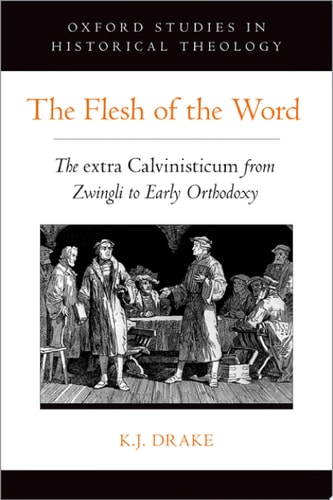
The Flesh of the Word: The Extra Calvinisticum from Zwingli to Early Orthodoxy
0
0
As an Amazon Associate and affiliate partner, Menrva Books earns from qualifying purchases. Learn more
Author Description
The extra Calvinisticum, the doctrine that the eternal Son maintains his existence beyond the flesh both during his earthly ministry and perpetually, divided the Lutheran and Reformed traditions during the Reformation. This book explores the emergence and development of the extra Calvinisticum in the Reformed tradition by tracing its first exposition from Ulrich Zwingli to early Reformed orthodoxy. Rather than being an ancillary issue, the questions surrounding the extra Calvinisticum were a determinative factor in the differentiation of Magisterial Protestantism into rival confessions. Reformed theologians maintained this doctrine in order to preserve the integrity of both Christ's divine and human natures as the mediator between God and humanity. This rationale remained consistent across this period with increasing elaboration and sophistication to meet the challenges leveled against the doctrine in Lutheran polemics. The study begins with Zwingli's early use of the extra Calvinisticum in the Eucharistic controversy with Martin Luther and especially as the alternative to Luther's doctrine of the ubiquity of Christ's human body. Over time, Reformed theologians, such as Peter Martyr Vermigli and Antione de Chandieu, articulated the extra Calvinisticum with increasing rigor by incorporating conciliar christology, the church fathers, and scholastic methodology to address the polemical needs of engagement with Lutheranism. The Flesh of the Word illustrates the development of christological doctrine by Reformed theologians offering a coherent historical narrative of Reformed christology from its emergence into the period of confessionalization. The extra Calvinisticum was interconnected to broader concerns affecting concepts of the union of Christ's natures, the communication of attributes, and the understanding of heaven.
Menrva's Summary
THE THESIS
This book investigates the historical emergence and theological development of the extra Calvinisticum as a defining doctrine within the Reformed tradition from the Reformation through the era of early orthodoxy. K.J. Drake examines how Reformed theologians utilized this doctrine to maintain the integrity of Christ's divine and human natures amidst intense polemical engagement with Lutheranism. By analyzing primary texts from figures such as Ulrich Zwingli, Peter Martyr Vermigli, and Antoine de Chandieu, the author demonstrates how the doctrine evolved in sophistication to address challenges regarding the communication of attributes and the nature of Christ's presence. The study argues that this doctrine was not a peripheral concern but a central factor in the confessional differentiation of Protestantism.
THE SCOPE MAP
What You Will Find
- A historical analysis of the extra Calvinisticum from the early Reformation to the period of early Reformed orthodoxy.
- Examination of the Eucharistic controversies between Reformed and Lutheran traditions regarding the ubiquity of Christ's body.
- Integration of scholastic methodology, patristic sources, and conciliar christology as tools for theological development.
- Exploration of the interconnectedness between christological doctrine and broader concepts of the union of natures and the nature of heaven.
THE AUTHORITY PERSPECTIVE
Scholars and theologians identify this work as a rigorous contribution to the study of Reformed christology and confessional history. Readers frequently note the academic density of the prose and the author's meticulous use of primary source material to trace the evolution of complex theological arguments.
Page Count:
335
Publication Date:
2021-01-01
Publisher:
Oxford University Press
ISBN-10:
0197567967
ISBN-13:
9780197567968
Religion
History
Christology
Christianity
Reformation
Theology
Theology doctrinal
Community Tags
Similar Books