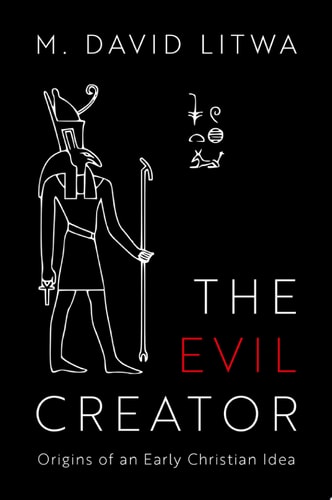
The Evil Creator: Origins of an Early Christian Idea
0
0
As an Amazon Associate and affiliate partner, Menrva Books earns from qualifying purchases. Learn more
Author Description
This book examines the origins of the evil creator idea chiefly in light of early Christian biblical interpretations. It is divided into two parts. In Part I, the focus is on the interpretations of Exodus and John. Firstly, ancient Egyptian assimilation of the Jewish god to the evil deity Seth-Typhon is studied to understand its reapplication by Phibionite and Sethian Christians to the Judeo-catholic creator. Secondly, the Christian reception of John 8:44 (understood to refer to the devil's father) is shown to implicate the Judeo-catholic creator in murdering Christ. Part II focuses on Marcionite Christian biblical interpretations. It begins with Marcionite interpretations of the creator's character in the Christian "Old Testament," analyzes 2 Corinthians 4:4 (in which "the god of this world" blinds people from Christ's glory), examines Christ's so-called destruction of the Law (Eph 2:15) and the Lawgiver, and shows how Christ finally succumbs to the "curse of the Law" inflicted by the creator (Gal 3:13). A concluding chapter shows how still today readers of the Christian Bible have concluded that the creator manifests an evil character.
Menrva's Summary
THE THESIS
This book investigates the historical and theological origins of the concept of an evil creator deity within early Christian thought. M. David Litwa, a scholar of early Christianity and Gnosticism, utilizes a rigorous examination of primary biblical texts and ancient polemical writings to trace how specific interpretations of the Old Testament and the Gospel of John fostered the belief in a malevolent demiurge. The work provides a structured analysis of how these early Christian groups, including the Phibionites, Sethians, and Marcionites, constructed their arguments against the traditional Judeo-catholic creator.
THE SCOPE MAP
What You Will Find
- Analysis of the assimilation of the Jewish god to the Egyptian deity Seth-Typhon.
- Examination of the Christian reception of John 8:44 and its implications for the creator's role in the death of Christ.
- Detailed study of Marcionite biblical interpretation regarding the character of the creator in the Old Testament.
- Exegesis of key Pauline passages, including 2 Corinthians 4:4, Ephesians 2:15, and Galatians 3:13.
THE AUTHORITY PERSPECTIVE
Scholars and students of early Christian history recognize this text as a focused contribution to the study of Gnostic and Marcionite theology. Readers frequently note the academic density of the prose and the author's precise handling of complex primary source material.
Page Count:
288
Publication Date:
2021-01-01
Publisher:
Oxford University Press
ISBN-10:
0197566448
ISBN-13:
9780197566442
History
Religion
Theology
Theology doctrinal
Judaism
Christianity
Community Tags
Similar Books