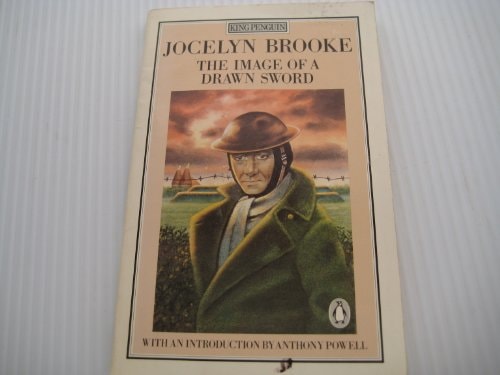
The Image of a Drawn Sword
0
0
As an Amazon Associate and affiliate partner, Menrva Books earns from qualifying purchases. Learn more
Author Description
The calm of Reynard Langrish's quietly predictable life is shattered when, on a night of rain-swept storm, a stranger - a young soldier called Captain Archer - appears at his remote Kentish cottage. He takes Langrish to an ancient hill fort and introduces him to the men under his command, all of whom share a mysterious tattoo - two snakes entwined around a drawn sword - and are engaged in preparations to defend against a nameless menace, referred to only as `the Emergency'. As the dreamlike narrative rapidly accelerates into Kafkaesque nightmare, Langrish is drawn into a world where illusion, paranoia, and reality unite with lethal consequences, and disorienting shifts of time and perception culminate in a terrifying moment of pure horror. Originally published in 1950, The Image of a Drawn Sword is steeped in the themes and images that occupy much of Brooke's writing - the relentlessness of time, suppressed homosexuality, condemned love, self-hatred, and futility; and, above all, an England that was both real and uniquely his own, a mystical, half-known natural world. `In its way not inferior to Kafka... [it has] a haunting, sinister quality' - Anthony Powell `Seldom have naturalism and fantasy been more strangely merged' - Elizabeth Bowen `He is subtle as the devil' - John Betjeman `The skill and intensity of the writing made peculiarly haunting this cry of complaint on behalf of a bewildered Man' - Pamela Hansford Johnson, Daily Telegraph
Menrva's Summary
THE PULSE
The arrival of a mysterious soldier at a secluded cottage disrupts the protagonist's mundane existence, pulling him into a clandestine and ominous military operation. Reynard Langrish, a man defined by his quiet routine, finds his reality destabilized by Captain Archer, who introduces him to a secretive group of men marked by a shared tattoo. As Langrish is coerced into participating in preparations for an undefined 'Emergency,' he struggles against the encroaching influence of a surreal, militaristic hierarchy. The narrative utilizes a disorienting, dreamlike framework that blurs the line between the protagonist's internal anxieties and the external, potentially hostile environment.
INSIDE THE PAGES
- Kafkaesque atmosphere of bureaucratic and existential dread
- Symbolism of the entwined snakes and drawn sword
- Exploration of the tension between naturalism and fantasy
- Themes of suppressed identity and social alienation
- Non-linear shifts in time and perception
- Setting characterized by a mystical, isolated English landscape
- Focus on the psychological disintegration of the protagonist
- Use of paranoia as a primary narrative driver
THE COLLECTIVE ECHO
Readers and critics frequently note the haunting, sinister quality that permeates the narrative, often comparing the author's style to the existential unease found in Kafka's work. Discussion often centers on the effective blending of mundane naturalism with a creeping, surreal sense of impending doom. Many highlight the book's ability to evoke a specific, mystical version of the English countryside that mirrors the protagonist's internal confusion. The text is often analyzed for its subtext regarding suppressed identity and the futility of resistance against an ambiguous, all-encompassing authority. Overall, the work is recognized for its technical precision in maintaining a sense of mounting dread throughout the story.
Page Count:
144
Publication Date:
1983-01-01
Publisher:
Penguin
ISBN-10:
0140062947
ISBN-13:
9780140062946
Literary Fiction
Psychological Thriller
Gothic
Surrealism
Literary
British literature
Community Tags
Other Editions(3)
Similar Books