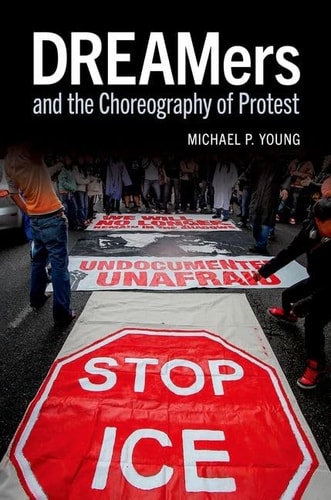
DREAMers and the Choreography of Protest: Oxford Studies in Culture and Politics
0
0
As an Amazon Associate and affiliate partner, Menrva Books earns from qualifying purchases. Learn more
Author Description
I Took Mo's Claim That Day In San Antonio That There Did Not Exist An Authentic Movement As Something Of A Taunt. Was Mo, A Wickedly Intuitive Thinker, Having A Go With A Sociologist Who Had Come To Interview Him About His Role In The Migrant Rights Movement? Was He Feeding Me The Sour Fruit Of His Failed Struggle For Leadership And Recognition In That Movement? Or Did He Understand Something Important That I Was Missing? This Book Is Largely The Result Of My Trying To Square His Claim With Protests On The Ground That Seemed To Me To Be Countouring A Radical And Dynamic Migrant Rights Movement-actions That Included The Dream 30 Border Crossing I Had Just Witnessed. The Empirical Analysis I Present In The Chapters To Follow Challenges And Confirms Aspects Of Mo's Claim. These Chapters Cover A Decade Of Collective Actions Organized By Undocumented Youth. They Chronicle How A Relatively Small Network Of Activists Almost Single-handedly Radicalized A Social Movement. But To Understand How This Happened, Mo's Claim That There Was No Movement Must Be Taken Seriously. If This 'no-movement' Claim Is Contradicted By The Very Actions Organized By Niya And Emulated By Other Organizations, The Activists Who Pulled Off These Influential Protests Managed To Do So Precisely Because They Believed There Was No Real Movement. Defending The Claim That There Was A Social Movement Turns Out To Be A Slippery Intellectual Task. It Is Not Simply A Matter Of Finding Evidence To Answer An Empirical Question. Sociologists Are Not In Agreement About What Social Movements Are. It Is Not Much Of An Exaggeration To Say That No One Knows What A Movement Is. Many Scholars Have Decided To Simply Jettison The Term, And All The Fuzzy Thinking Associated With It, For Alternatives Like Contentious Politics Or Challengers. We Often See Social Movements Where They Do Not Exist. We Extend The Movement Label To Tidily Gather-up A Wide Range Of Collective Actions And Protests That Appear To Advance A Cause F
Menrva's Summary
THE THESIS
This book investigates the ontological status of social movements by examining the decade-long activism of undocumented youth and the paradox of their self-proclaimed 'no-movement' identity. Michael P. Young, a sociologist, utilizes this case study to challenge established academic definitions of collective action. By analyzing the tension between observed protests and the participants' own skepticism regarding movement authenticity, the author constructs a framework for understanding how radicalization occurs within contentious politics.
THE SCOPE MAP
What You Will Find
- A decade-long longitudinal analysis of collective actions organized by undocumented youth activists.
- A critical evaluation of sociological definitions regarding what constitutes a social movement.
- Primary source evidence derived from interviews and direct observation of protest events, including the Dream 30 border crossing.
- An exploration of how the belief in the absence of a movement can paradoxically fuel the radicalization of political tactics.
THE AUTHORITY PERSPECTIVE
Scholars in the field of political sociology recognize this work as a rigorous interrogation of movement theory that forces a re-evaluation of how researchers label collective action. The text is noted for its academic density and its willingness to engage with the philosophical ambiguity inherent in defining political movements.
Page Count:
320
Publication Date:
2024-09-04
Publisher:
Oxford University Press
ISBN-10:
0197608191
ISBN-13:
9780197608197
Politics
Social Theory
Specific Topics
Activism
Immigration
Sociology
Community Tags
Similar Books