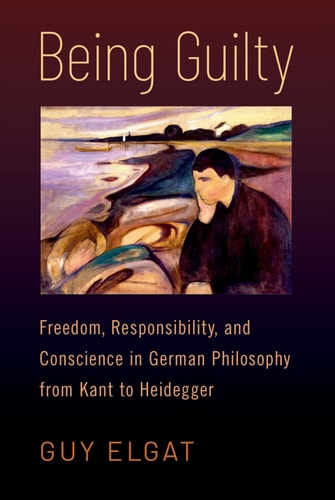
Being Guilty: Freedom, Responsibility, and Conscience in German Philosophy from Kant to Heidegger
0
0
As an Amazon Associate and affiliate partner, Menrva Books earns from qualifying purchases. Learn more
Author Description
What can guilt, the painful sting of the bad conscience, tell us about who we are as human beings? How can it be explained or justified? Being Guilty seeks to answer these questions through an examination of the views of Kant, Schelling, Schopenhauer, Paul Rée, Nietzsche, and Heidegger on guilt, freedom, responsibility, and conscience.The concept of guilt has not received sufficient attention from scholars working in the history of German philosophy. What's more, even individual thinkers whose conceptions of guilt have been researched have not been studied fully within their historical contexts. Guy Elgat redresses both these scholarly lacunae to show how these philosophers' arguments can be more deeply grasped once read in their historical context, a history that should be read as proceeding dialectically. Thus, in Kant, Schelling, and Schopenhauer, we find variations on the idea that guilt for specific actions we perform is justified because the human agent is guilty in his very being--a guilt for which he is responsible. In contrast, in Rée and Nietzsche, these ideas are rejected and guilt is seen as rarely justified but rather explainable through human psychology. Finally, in Heidegger, we find a near synthesis of the views of the previous philosophers, as he argues we are guilty in our very being yet are not responsible for this guilt. In the process of unfolding the trajectory of these evolving conceptions of guilt, the philosophers' views on these and many other issues are explored in depth, and through them Elgat articulates an entirely new approach to guilt.
Menrva's Summary
THE THESIS
This book investigates the fundamental nature of guilt and its relationship to human freedom, responsibility, and conscience through the lens of German philosophy. Author Guy Elgat examines the evolution of these concepts by analyzing the works of Kant, Schelling, Schopenhauer, Paul Rée, Nietzsche, and Heidegger. By situating these thinkers within a dialectical historical framework, Elgat argues that their disparate views on guilt reveal deeper insights into the human condition and the nature of moral accountability.
THE SCOPE MAP
What You Will Find
- A comparative analysis of guilt as an ontological state versus a psychological phenomenon.
- A dialectical history of German thought spanning from the Enlightenment to the mid-20th century.
- Detailed examinations of the shift from metaphysical responsibility in early German idealism to the psychological critiques of the late 19th century.
- A synthesis of Heideggerian existential guilt as a distinct category of being.
THE AUTHORITY PERSPECTIVE
Scholars recognize this work as a significant contribution to the history of German philosophy, specifically for its focus on a neglected thematic thread. Readers frequently note the academic density of the prose, which is intended for those with a background in continental philosophy.
Page Count:
330
Publication Date:
2021-01-01
Publisher:
Oxford University Press
ISBN-10:
0197605583
ISBN-13:
9780197605585
Philosophy
Ethics
History & Surveys
Existentialism
German Philosophy
Community Tags
Similar Books