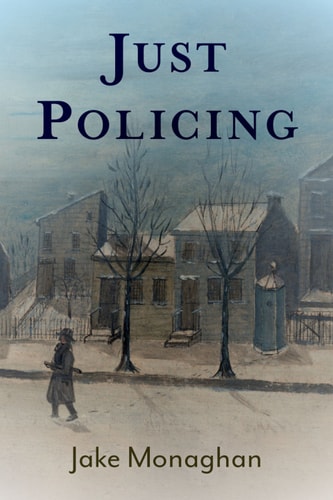
Just Policing
0
0
As an Amazon Associate and affiliate partner, Menrva Books earns from qualifying purchases. Learn more
Author Description
Policing is a source of perennial conflict and philosophical disagreement. Though the injustices of our world seemingly require some kind of policing, the police are often sources of injustice themselves. But this is not always a result of intentionally or negligently bad policing. Sometimes it is an unavoidable result of the injustices that emerge from interactions with other social systems. This raises an important question of just policing: how should police respond to the injustices built into the system? Just Policing attempts an answer, offering a theory of just policing in non-ideal contexts.Jake Monaghan argues that police discretion is not only unavoidable, but in light of non-ideal circumstances, valuable. This conflicts with a widespread but inchoate view of just policing, the legalist view that finds justice in faithful enforcement of the criminal code. But the criminal code leaves policing seriously underdetermined; full enforcement is neither possible nor desirable. So, police need an alternative normative framework for evaluating and guiding their exercise of power. Just Policing draws on research in political philosophy and the social sciences to engage a number of current controversies, both scholarly and popular, regarding the police. It critiques popular approaches to police abolitionism while defending normative limits on police power. The book offers a defense of police discretion against common objections and evaluates controversial issues in order maintenance, such as the policing of "vice" and homelessness, democratic control over policing, community policing initiatives, police collaborations and alternatives like mental health response teams, and possibilities for structural reform.
Menrva's Summary
THE THESIS
How should police respond to the injustices built into the system when operating within non-ideal social contexts? Jake Monaghan, a scholar in political philosophy, investigates the inherent tension between the necessity of policing and the systemic injustices that police often perpetuate. By synthesizing research from political theory and the social sciences, the author challenges the legalist view that justice is found solely in the strict enforcement of the criminal code, proposing instead a normative framework that centers on the necessity and value of police discretion.
THE SCOPE MAP
What You Will Find
- A theoretical framework for evaluating police power in non-ideal, real-world conditions.
- An analysis of the limitations of the legalist approach to criminal code enforcement.
- A critical evaluation of contemporary debates including police abolitionism, community policing, and mental health response alternatives.
- A systematic defense of police discretion as a tool for navigating complex social interactions.
THE AUTHORITY PERSPECTIVE
Experts identify this work as a significant contribution to the philosophy of law, particularly for its attempt to bridge the gap between abstract political theory and the practical realities of modern policing. Readers frequently note the academic density of the prose, which serves as a rigorous resource for those examining the structural and ethical dimensions of police reform.
Page Count:
242
Publication Date:
2023-01-01
Publisher:
Oxford University Press
ISBN-10:
0197610749
ISBN-13:
9780197610749
Philosophy
Social justice
Criminology
Law
Political Philosophy
Sociology