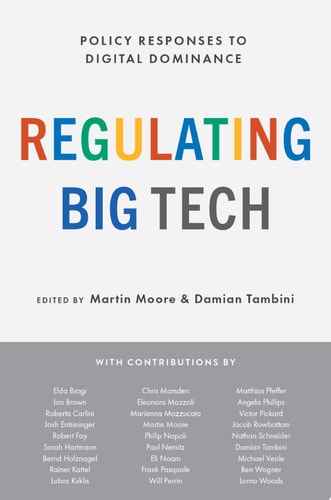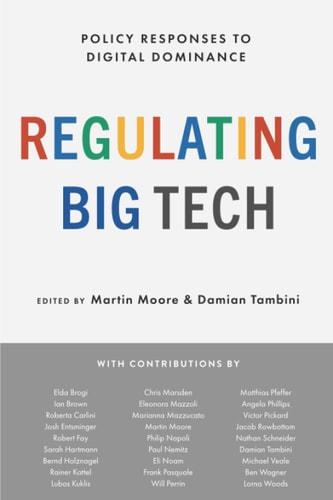
Regulating Big Tech: Policy Responses to Digital Dominance
0
0
As an Amazon Associate and affiliate partner, Menrva Books earns from qualifying purchases. Learn more
Author Description
Selected chapters from this book are published open access and free to read or download from Oxford Scholarship Online, https://oxford.universitypressscholarship.com/.Since Digital Dominance was published in 2018, a global consensus has emerged that technology platforms should be regulated. Governments from the United States to Australia have sought to reduce the power of these platforms and curtail the dominance of a few, yet regulatory responses remain fragmented, with some focused solely on competition while others seek to address issues around harm, privacy, and freedom of expression.Regulating Big Tech condenses the vibrant tech policy debate into a toolkit for the policy maker, legal expert, and academic seeking to address one of the key issues facing democracies today: platform dominance and its impact on society. Contributors explore elements of the toolkit through comprehensive coverage of existing and future policy on data, antitrust, competition, freedom of expression, jurisdiction, fake news, elections, liability, and accountability, while also identifying potential policy impacts on global communication, user rights, public welfare, and economic activity.With original chapters from leading academics and policy experts, Regulating Big Tech sets out a policy framework that can address interlocking challenges of contemporary tech regulation and offer actionable solutions for our technological future.
Menrva's Summary
THE THESIS
This book investigates how governments can effectively regulate dominant technology platforms to protect democratic values and public welfare. The authors, Martin Moore and Damian Tambini, curate a collection of essays from leading academics and policy experts to synthesize the current global regulatory landscape. By examining the fragmentation of existing policies, the text provides a structured framework for addressing the multifaceted challenges posed by Big Tech, including antitrust concerns, data privacy, and the impact on freedom of expression.
THE SCOPE MAP
What You Will Find
- Comprehensive analysis of policy approaches to data, antitrust, and competition law.
- Examination of the intersection between platform dominance and democratic processes like elections.
- Evaluation of liability and accountability frameworks for digital platforms.
- Discussion on the global implications of tech regulation for communication and economic activity.
THE AUTHORITY PERSPECTIVE
Experts identify this work as a critical resource for policymakers and legal scholars navigating the complexities of digital governance. Readers frequently note the academic rigor and the practical utility of the proposed policy toolkits for addressing contemporary technological challenges.
Page Count:
382
Publication Date:
2021-10-01
Publisher:
Oxford University Press
ISBN-10:
0197616100
ISBN-13:
9780197616109
Politics
Economics
Economic History
Public Policy
Sociology
Law
Technology
Community Tags
Other Editions(2)
Similar Books