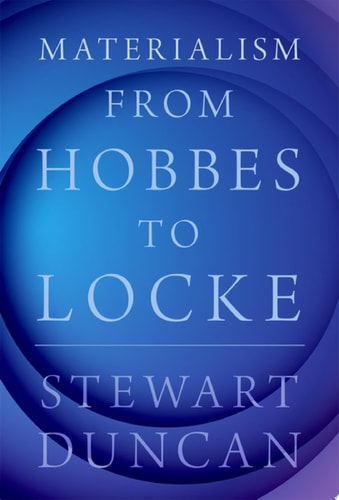
Materialism from Hobbes to Locke
0
0
As an Amazon Associate and affiliate partner, Menrva Books earns from qualifying purchases. Learn more
Author Description
Are human beings purely material creatures, or is there something else to them, an immaterial part that does some (or all) of the thinking, and might even be able to outlive the death of the body? This book is about how a series of seventeenth-century philosophers tried to answer that question. It begins by looking at the views of Thomas Hobbes, who developed a thoroughly materialist account of the human mind, and later of God as well. This is in obvious contrast to the approach of his contemporary René Descartes. After examining Hobbes's materialism, Stewart Duncan considers the views of three of his English critics: Henry More, Ralph Cudworth, and Margaret Cavendish. Both More and Cudworth thought Hobbes's materialism radically inadequate to explain the workings of the world, while Cavendish developed a distinctive, anti-Hobbesian materialism of her own. The second half of the book focuses on the discussion of materialism in John Locke's Essay concerning Human Understanding, arguing that we can better understand Locke's discussion if we see how and where he is responding to this earlier debate. At crucial points Locke draws on More and Cudworth to argue against Hobbes and other materialists. Nevertheless, Locke did a good deal to reveal how materialism was a genuinely possible view, by showing how one could develop a detailed account of the human mind without presuming it was an immaterial substance.This work probes the thought and debates that originated in the seventeenth-century yet extended far beyond it. And it offers a distinctive, new understanding of Locke's discussion of the human mind.
Menrva's Summary
THE THESIS
This book investigates the development of materialist philosophy in the seventeenth century and its influence on the foundational work of John Locke. Stewart Duncan, a scholar of early modern philosophy, examines the intellectual tension between materialist and immaterialist accounts of the human mind. By tracing the arguments from Thomas Hobbes through his critics and into Locke's own writings, the book provides a rigorous analysis of how these thinkers navigated the possibility of a purely physical existence.
THE SCOPE MAP
What You Will Find
- Analysis of Thomas Hobbes's materialist account of the mind and God.
- Comparative study of seventeenth-century critics including Henry More, Ralph Cudworth, and Margaret Cavendish.
- Examination of John Locke's Essay concerning Human Understanding in the context of earlier materialist debates.
- Exploration of the philosophical transition from immaterial substance theories to modern materialist frameworks.
THE AUTHORITY PERSPECTIVE
Scholars recognize this work as a precise contribution to the history of early modern philosophy, particularly for its nuanced reading of Locke's intellectual influences. Readers frequently note the academic density of the prose, which serves as a specialized resource for students and researchers of seventeenth-century metaphysics.
Page Count:
243
Publication Date:
2021-01-01
Publisher:
Oxford University Press
ISBN-10:
0197613020
ISBN-13:
9780197613023
History
Philosophy
Metaphysics
Modern History
Pragmatism
European History
Materialism
Community Tags
Other Editions(3)
Similar Books
Reader Comments
Share Your Thoughts
No comments yet. Be the first to share your thoughts!