The Two Faces of Democracy: Decentering Agonism and Deliberation
0
0
As an Amazon Associate and affiliate partner, Menrva Books earns from qualifying purchases. Learn more
Author Description
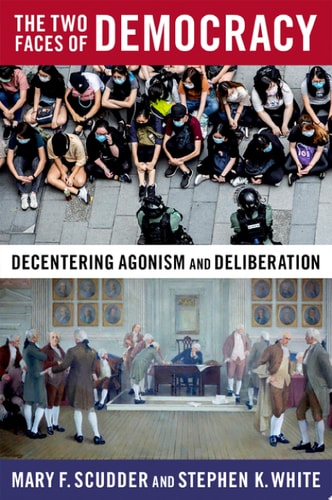
The democratic imagination is facing significant challenges. These challenges involve not only philosophical questions about the core values of democratic life, but also pressing practical issues related to how we should understand and confront current threats to democracy. Those who want to defend democracy against anti-democratic forces are at odds: some want a politics that puts vehement conflict at the center of democratic strategies, while others assert the necessity of more civil and deliberative strategies. What should our stance be as defenders of democratic life?In The Two Faces of Democracy, Mary F. (Molly) Scudder and Stephen K. White present an analysis of these two stances, the deliberative and agonistic models of democracy, arguing that neither is adequate on its own. The deliberative model emphasizes reasoned discussion, but some worry that this discounts structures of injustice that distort civil deliberation. The agonistic model prioritizes contestation and conflict, but this prime orientation to defeating political antagonists risks corroding our commitment to normative democratic restraints, like fairness. In developing an understanding of the moral core of democracy, Scudder and White show that these two faces of democratic life each have a significant, but constrained, role to play in a more capacious comprehension of what our democratic commitments require of us. An original and timely contribution to democratic theory, Scudder and White illuminate the tensional congruence of these two faces of democracy, and, in doing so, argue for the importance of both models in the current struggle for a healthy democratic future.
Menrva's Summary
THE THESIS
How can democratic theory reconcile the competing demands of deliberative reason and agonistic conflict to address contemporary threats to democratic stability? Mary F. Scudder and Stephen K. White, both established scholars in political theory, examine the limitations of two dominant democratic models: the deliberative approach, which favors reasoned discourse, and the agonistic approach, which emphasizes political contestation. The authors argue that neither model is sufficient in isolation, proposing instead a framework that integrates both elements to better navigate the moral and practical challenges facing modern democratic societies.
THE SCOPE MAP
What You Will Find
- A comparative analysis of deliberative and agonistic democratic theories
- An examination of the structural injustices that can undermine civil deliberation
- A critique of the risks associated with prioritizing conflict over normative democratic restraints
- A proposed synthesis for a more capacious understanding of democratic commitments
THE AUTHORITY PERSPECTIVE
Scholars and political theorists identify this work as a significant contribution to the ongoing debate regarding the future of democratic institutions. Readers frequently note the clarity with which the authors navigate complex theoretical tensions, making it a valuable resource for those studying political philosophy.
Page Count:
210
Publication Date:
2023-04-07
Publisher:
Oxford University Press
ISBN-10:
0197623883
ISBN-13:
9780197623886
Philosophy
Political Theory
Sociology
Democracy
Community Tags
Similar Books