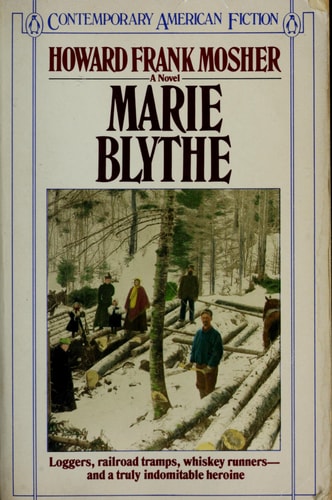
Marie Blythe
0
0
As an Amazon Associate and affiliate partner, Menrva Books earns from qualifying purchases. Learn more
Author Description
In turn-of-the-century New England, Marie wanders with gypsies, dances in a barroom, survives a miscarriage, helps save tuberculosis victims, and never looses her will to survive
Menrva's Summary
THE PULSE
Marie Blythe navigates the harsh social and physical landscape of turn-of-the-century New England while struggling to maintain her autonomy against a series of personal and societal crises. Driven by a persistent will to survive, Marie moves through disparate social spheres, from the transient life of a gypsy camp to the rigid confines of a barroom and the desperate conditions of a tuberculosis ward. The narrative follows her development as she encounters systemic obstacles and personal trauma, including the loss of a child. The story is presented through a linear progression that emphasizes the protagonist's physical movement across the landscape and her evolving internal resilience.
INSIDE THE PAGES
- Exploration of turn-of-the-century New England social hierarchies
- Depiction of transient lifestyles and gypsy culture
- Focus on the physical and psychological toll of survival
- Integration of historical medical crises such as tuberculosis
- Examination of female agency in a restrictive era
- Use of atmospheric, period-specific settings
- Character-driven narrative structure
- Emphasis on the protagonist's internal endurance
THE COLLECTIVE ECHO
Readers and critics often note the stark, unvarnished portrayal of the protagonist's life in early twentieth-century New England. Discussion frequently centers on the author's ability to balance the gritty realities of poverty and illness with the character's unwavering determination. Many observers highlight the atmospheric quality of the prose, which effectively captures the isolation and hardship of the setting. The narrative is often praised for its focus on character development over conventional plot mechanics, providing a detailed look at a woman navigating a challenging social environment. Readers who appreciate character-focused historical fiction often find the protagonist's resilience to be the primary draw of the work.
Page Count:
464
Publication Date:
1989-10-01
Publisher:
Penguin Books
ISBN-10:
014007659X
ISBN-13:
9780140076592
Historical Fiction
Literary Fiction
Coming of Age
Literary
World Literature
New England
Canadian