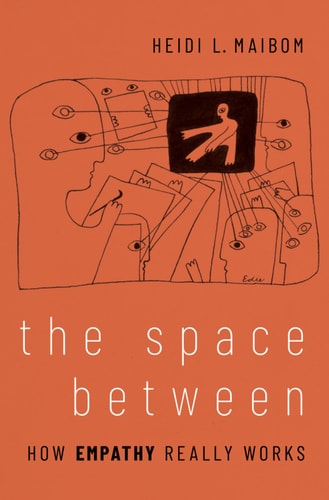
The Space Between: How Empathy Really Works
0
0
As an Amazon Associate and affiliate partner, Menrva Books earns from qualifying purchases. Learn more
Author Description
When Barack Obama nominated Sonia Sotomayor to the US Supreme Court, his comments that a judge should have "the heart, the empathy, to recognize what it's like to be a young teenage mom, the empathy to understand what it's like to be poor or African-American or gay, disabled, or old" caused a furor. Objective, reasoned, and impartial judgment were to be replaced by partiality, sentiment, and bias, critics feared. This concern about empathy has since been voiced not just by conservative critics, but by academics and public figures. In The Space Between, Heidi Maibom combines results from philosophy, psychology, and neuroscience to argue that rather than making us more biased or partial, empathy makes us more impartial and more objective. The problem is that we don't see the world objectively in the first place, Maibom explains. We see it in terms of how we are placed in it: as an extension of our interests, capabilities, and relationships. This is a perspective and it determines what we pay attention to, how we interpret events, and what matters to us individually. It is not private, however. By means of the imagination, Maibom contends, we can place ourselves in another person's web interests, capabilities, and relationships and, viewing the world from there, experience a new way of interpreting and valuing what happens. This broadens and deepens our understanding of others and the world around us. It also helps us understand the greater reality of who we are ourselves.Maibom's book weaves together results from philosophy, psychology, and neuroscience to provide a positive up-to-date view of what it really means to take another person's perspective, and how empathy, rather than being the enemy of objectivity, is the foundation of it.
Menrva's Summary
THE THESIS
Does the capacity for empathy hinder or facilitate objective judgment? Heidi Lene Maibom, a philosopher specializing in the intersection of mind and ethics, synthesizes empirical data from psychology and neuroscience to challenge the common assumption that empathy is inherently biased. She argues that human perception is naturally subjective, and that empathy serves as a cognitive tool to expand our limited perspective, ultimately acting as a foundation for greater objectivity rather than a threat to it.
THE SCOPE MAP
What You Will Find
- An interdisciplinary analysis combining philosophical inquiry with findings from contemporary neuroscience and psychology.
- A detailed examination of how individual interests, capabilities, and relationships shape personal perspective.
- A theoretical framework explaining how the imagination functions as a mechanism for perspective-taking.
- Evidence-based arguments regarding the role of empathy in social cognition and moral reasoning.
THE AUTHORITY PERSPECTIVE
Experts in the field of cognitive philosophy recognize this work as a significant contribution to the ongoing debate regarding the nature of empathy and moral judgment. Readers frequently note that the text provides a rigorous, well-structured argument that successfully bridges the gap between abstract philosophical concepts and empirical scientific research.
Page Count:
319
Publication Date:
2022-01-01
Publisher:
Oxford University Press
ISBN-10:
0197637108
ISBN-13:
9780197637104
Psychology
Philosophy
Perspective Philosophy
Neuroscience
Mind & Body
Ethics
Empathy
Community Tags
Similar Books