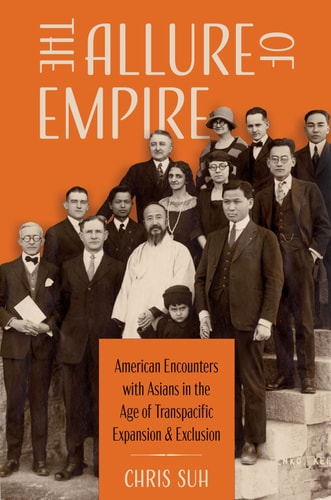
The Allure of Empire: American Encounters with Asians in the Age of Transpacific Expansion and Exclusion
0
0
As an Amazon Associate and affiliate partner, Menrva Books earns from qualifying purchases. Learn more
Author Description
The Allure of Empire traces how American ideas about race in the Pacific were made and remade on the imperial stage before World War II. Following the Russo-Japanese War, the United States cultivated an amicable relationship with Japan based on the belief that it was a "progressive" empire akin to its own. Even as the two nations competed for influence in Asia and clashed over immigration issues in the American West, the mutual respect for empire sustained their transpacific cooperation until Pearl Harbor, when both sides disavowed their history of collaboration and cast each other as incompatible enemies.In recovering this lost history, Chris Suh reveals the surprising extent to which debates about Korea shaped the politics of interracial cooperation. American recognition of Japan as a suitable partner depended in part on a positive assessment of its colonial rule of Korea. It was not until news of Japan's violent suppression of Koreans soured this perception that the exclusion of Japanese immigrants became possible in the United States. Central to these shifts in opinion was the cooperation of various Asian elites aspiring to inclusion in a "progressive" American empire. By examining how Korean, Japanese, and other nonwhite groups appealed to the United States, this book demonstrates that the imperial order sustained itself through a particular form of interracial collaboration that did not disturb the existing racial hierarchy.
Menrva's Summary
THE THESIS
This book investigates how American perceptions of race and empire in the Pacific were constructed and transformed through transpacific interactions between the United States, Japan, and Korea prior to World War II. Chris Suh, a historian of the United States and the Pacific world, utilizes archival research to examine the diplomatic and social dynamics that allowed the U.S. to view Japan as a 'progressive' imperial partner. The work argues that American racial hierarchies were maintained through a specific form of interracial collaboration, where Asian elites sought inclusion within the American imperial framework, ultimately shaping domestic immigration policies and international alliances.
THE SCOPE MAP
What You Will Find
- Analysis of the geopolitical relationship between the United States and Japan following the Russo-Japanese War.
- Examination of the role of Korean colonial status in influencing American public opinion and legislative debates.
- Investigation into the strategies used by Asian elites to navigate and appeal to the American imperial order.
- Historical evidence detailing the shift from transpacific cooperation to the adversarial stance adopted after the attack on Pearl Harbor.
THE AUTHORITY PERSPECTIVE
Scholars in the field of transpacific history recognize this work as a significant contribution to understanding the intersection of racial ideology and imperial diplomacy. Readers frequently note the meticulous archival detail and the clarity with which the author connects international colonial politics to domestic American racial exclusion.
Page Count:
316
Publication Date:
2023-01-01
Publisher:
Oxford University Press
ISBN-10:
0197631649
ISBN-13:
9780197631645
History
Asian History
International relations
Sociology
History of the Americas
Imperialism
American History
United States
Community Tags
Similar Books














