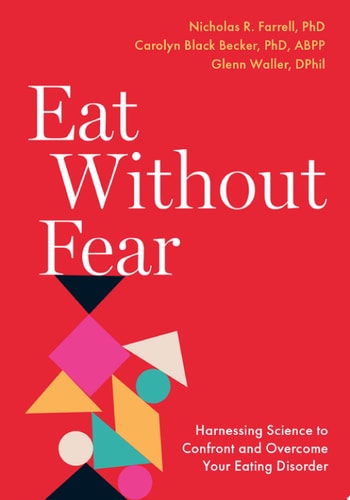
Eat Without Fear: Harnessing Science to Confront and Overcome Your Eating Disorder
0
0
As an Amazon Associate and affiliate partner, Menrva Books earns from qualifying purchases. Learn more
Author Description
Eating disorders are serious conditions that can be hard to treat; however, the chances of overcoming an eating disorder increase when exposure therapy is used as part of the overall treatment strategy. Exposure therapy involves confronting (rather than avoiding) challenging scenarios that evoke distress, and though this technique has typically been used mainly by psychotherapists, people struggling with eating disorders can use it on their own to reduce troubling eating behaviors. Eat Without Fear provides practical, reader-friendly information about this innovative, scientifically-supported approach, as well as guidance on how to apply it effectively to beat an eating disorder using a "team approach" that involves family members, friends, and other loved ones. Readers will benefit from the use of easy-to-understand language describing the key concepts of eating disorders and how exposure therapy can help treat them. Additionally, the book guides readers through therapeutic activities that enable them to effectively practice exposure therapy techniques on their own. Given the value of involving family members and other supportive people in the eating disorder recovery process, this book encourages collaboration between readers and their loved ones and offers practical suggestions for how they can work together to achieve their desired goals.
Menrva's Summary
THE THESIS
This book investigates the efficacy of exposure therapy as a primary clinical tool for individuals seeking to overcome the behavioral patterns associated with eating disorders. The authors, Carolyn Black Becker, Glenn Waller, and Nicholas R. Farrell, utilize their clinical expertise to translate complex psychological frameworks into actionable strategies. By shifting the focus from avoidance to controlled confrontation of distress, the text provides a structured methodology for recovery that emphasizes both individual agency and the necessity of a supportive social network.
THE SCOPE MAP
What You Will Find
- Evidence-based principles of exposure therapy applied specifically to disordered eating behaviors.
- Practical, step-by-step therapeutic activities for self-guided practice.
- A collaborative framework for integrating family and friends into the recovery process.
- Clear explanations of the psychological mechanisms that maintain eating disorder symptoms.
THE AUTHORITY PERSPECTIVE
Experts and clinicians recognize this work as a highly accessible resource that bridges the gap between professional therapeutic intervention and patient-led recovery. Readers frequently note the clarity of the prose and the practical utility of the included exercises for managing daily distress.
Page Count:
200
Publication Date:
2024-01-01
Publisher:
Oxford University Press
ISBN-10:
0197642969
ISBN-13:
9780197642962
Psychology
Health
Self Help
Mental Health
Community Tags
Similar Books