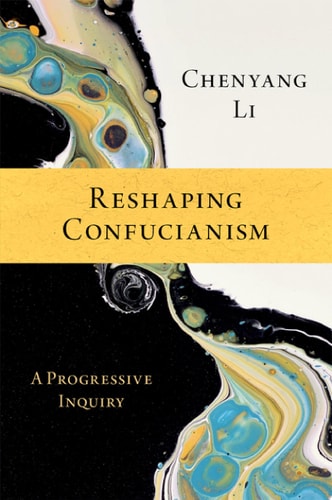
Reshaping Confucianism: A Progressive Inquiry
0
0
As an Amazon Associate and affiliate partner, Menrva Books earns from qualifying purchases. Learn more
Author Description
As a living and evolving tradition, Confucianism has been continuously defined and redefined in response to the changing political and social context of China's history. Extending this effort in reconstructing Confucianism, philosopher Chenyang Li critically analyzes and develops a series of core ideas that originated from classic Confucian texts and does so in the context of contemporary scholarly discourse. These core ideas include he (dynamic harmony), ren (care-centered virtue), li (ritual propriety), xiao (filial care), bie (gender equilibrium), you (friendship), shou (longevity), sheng (sagehood), ziyou (freedom), ping (equality), zheng (politics), and jiao (civic education). Li combines in-depth analysis of historical teachings with systematic deliberation on their contemporary significance, reflecting the current state of the field of research.Each chapter shows how seminal ideas in Confucianism were conceived and developed by ancient thinkers and how these ideas can be reconstructed and aligned in a sensible Confucian philosophy that responds to contemporary challenges. Over the course of its survey of Confucian philosophy, the book raises and investigates fundamental questions: How central is harmony as a Confucian value? Can Confucian sages be wrong? Is Xunzi's philosophy of filial care more progressive than Confucius' and hence more suitable in contemporary society? What is the best form of Confucian gender equality today? Is the model of “politics without politicians” a viable way for realizing the Confucian political ideal of the good society? Study questions are provided for each chapter to assist students to comprehend key points and develop their own views.
Menrva's Summary
THE THESIS
This book investigates how core Confucian concepts can be reconstructed to remain relevant and progressive within the framework of contemporary social and political discourse. Chenyang Li, a philosopher specializing in Chinese thought, utilizes a comparative methodology to bridge the gap between classical texts and modern challenges. By examining foundational ideas such as harmony, virtue, and ritual, the author argues for a dynamic interpretation of Confucianism that adapts to the evolving needs of modern society.
THE SCOPE MAP
What You Will Find
- A systematic analysis of twelve core Confucian concepts including he, ren, li, xiao, and zheng.
- A comparative framework evaluating ancient philosophical developments against modern scholarly discourse.
- Pedagogical study questions designed to facilitate critical engagement with each chapter's arguments.
- An investigation into the viability of Confucian political ideals, such as the concept of politics without politicians, in a contemporary context.
THE AUTHORITY PERSPECTIVE
Scholars and students of Chinese philosophy recognize this work as a structured contribution to the ongoing modernization of Confucian thought. Readers frequently note the clarity with which the author balances historical exegesis with contemporary application, making it a useful resource for academic study.
Page Count:
344
Publication Date:
2023-01-01
Publisher:
Oxford University Press
ISBN-10:
0197657621
ISBN-13:
9780197657621
Philosophy
Confucianism
Ethics
Political Philosophy
Social Philosophy
Community Tags
Similar Books