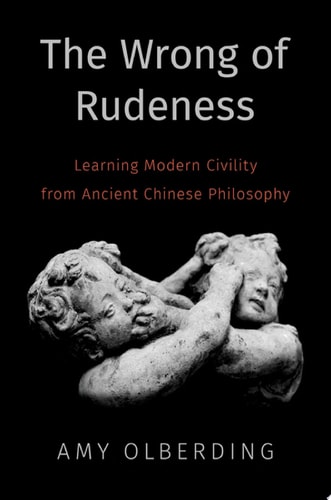
The Wrong of Rudeness: Learning Modern Civility from Ancient Chinese Philosophy
0
0
As an Amazon Associate and affiliate partner, Menrva Books earns from qualifying purchases. Learn more
Author Description
In a time of fractious politics, being rude can feel wickedly gratifying, while being polite can feel simple-minded or willfully naïve. Do manners and civility even matter now? Is it worthwhile to make the effort to be polite? When rudeness has become routine and commonplace, why bother? When so much of public and social life with others is painful and bitterly acrimonious, why should anyone be polite? As Amy Olberding argues, civility and ordinary politeness are linked both to big values, such as respect and consideration, and to the fundamentally social nature of human beings. Being polite is not just a nicety--it has deep meaning. Olberding explores the often overwhelming temptations to incivility and rudeness, and the ways that they must and can be resisted. Drawing on the wisdom of early Chinese philosophers who lived through great political turmoil but nonetheless avidly sought to "mind their manners," the book articulates a way of thinking about politeness that is distinctively social. We can feel profoundly alienated from others, and others can sometimes be truly terrible, yet, as the Confucian philosophers encourage us to see, because we are social, neglecting the social and political courtesies comes at perilous cost. The book considers not simply why civility and politeness are important, but how. It reveals how small insults can accumulate to damage social relations, how separating people into tribes undermines our better interests, and how even bodily and facial expressions can influence our lives with others. Many of us, in spite of our best efforts, are often tempted to be rude, and will find here tools for fighting that temptation.
Menrva's Summary
THE THESIS
This book investigates the moral and social necessity of civility in an era defined by political polarization and routine rudeness. Amy Olberding, a professor of philosophy, utilizes the ethical frameworks of early Chinese thinkers to argue that politeness is not merely a superficial social convention but a fundamental requirement for maintaining human connection. By examining the psychological and social costs of incivility, she posits that maintaining manners is a vital practice for resisting alienation and preserving the integrity of social structures.
THE SCOPE MAP
What You Will Find
- Philosophical analysis of Confucian perspectives on social ritual and etiquette.
- Examination of how minor insults and bodily expressions impact long-term social cohesion.
- Strategies for resisting the impulse toward rudeness in acrimonious environments.
Scope Limits
- The text does not provide a comprehensive history of Chinese political systems.
- It does not offer a prescriptive guide for specific modern political policy debates.
THE AUTHORITY PERSPECTIVE
Scholars and readers frequently note the accessibility of the prose, which translates complex philosophical concepts into practical applications for contemporary life. Experts highlight this work as a significant contribution to the intersection of virtue ethics and modern social discourse.
Page Count:
197
Publication Date:
2019-01-01
Publisher:
Oxford University Press
ISBN-10:
0190880988
ISBN-13:
9780190880989
Philosophy
Eastern
Confucianism
Social Science
Ethics
Self Help
Courtesy
Community Tags
Similar Books