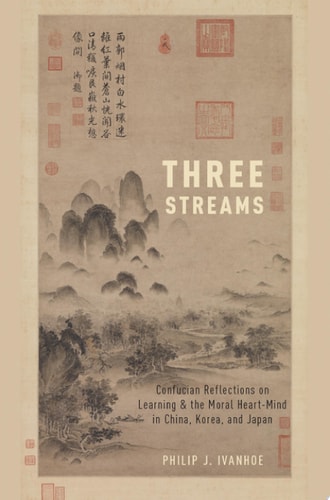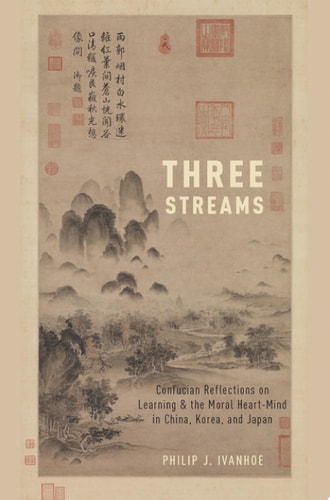
Three Streams
0
0
As an Amazon Associate and affiliate partner, Menrva Books earns from qualifying purchases. Learn more
Author Description
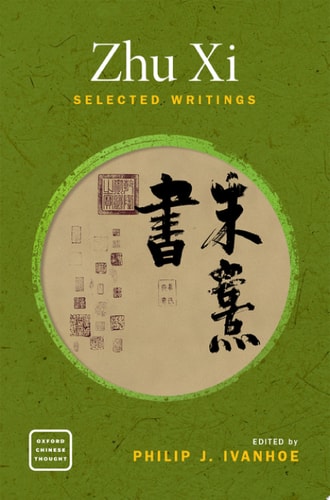
Recent Interest In Confucianism Has A Tendency To Suffer From Essentialism And Idealism, Manifested In A Variety Of Ways. One Example Is To Think Of Confucianism In Terms Of The Views Attributed To One Representative Of The Tradition, Such As Kongzi (confucius) (551-479 Bce) Or Mengzi (mencius) (372 - 289 Bce) Or One School Or Strand Of The Tradition, Most Often The Strand Or Tradition Associated With Mengzi Or, In The Later Tradition, That Formed Around The Commentaries And Interpretation Of Zhu Xi (1130-1200). Another Such Tendency Is To Think Of Confucianism In Terms Of Its Manifestations In Only One Country; This Is Almost Always China For The Obvious Reasons That China Is One Of The Most Powerful And Influential States In The World Today. A Third Tendency Is To Present Confucianism In Terms Of Only One Period Or Moment In The Tradition; For Example, Among Ethical And Political Philosophers, Pre-qin Confucianism--usually Taken To Be The Writings Attributed To Kongzi, Mengzi, And, If We Are Lucky, Xunzi (479-221 Bce)--often Is Taken As Confucianism. These And Other Forms Of Essentialism And Idealism Have Led To A Widespread And Deeply Entrenched Impression That Confucianism Is Thoroughly Homogenous And Monolithic (these Often Are Facts Mustered To Support The Purportedly Oppressive, Authoritarian, And Constricted Nature Of The Tradition); Such Impressions Can Be Found Throughout East Asia And Dominate In The West. This Is Quite Deplorable For It Gives Us No Genuine Sense Of The Creatively Rich, Philosophically Powerful, Highly Variegated, And Still Very Much Open-ended Nature Of The Confucian Tradition. This Volume Addresses This Misconstrual And Misrepresentation Of Confucianism By Presenting A Philosophically Critical Account Of Different Confucian Thinkers And Schools, Across Place (china, Korea, And Japan) And Time (the 10th To 19th Centuries).
Menrva's Summary
THE THESIS
This volume investigates the persistent misconstrual of Confucianism as a monolithic, homogenous tradition by challenging the essentialist and idealistic frameworks that dominate contemporary discourse. Philip J. Ivanhoe, a scholar of East Asian philosophy, utilizes a comparative historical approach to dismantle the tendency to reduce Confucian thought to a single representative, country, or time period. By examining diverse thinkers and schools across China, Korea, and Japan from the 10th to the 19th centuries, the author argues for a more nuanced understanding of the tradition as a variegated and open-ended philosophical system.
THE SCOPE MAP
What You Will Find
- Comparative analysis of Confucian thought across China, Korea, and Japan.
- Examination of intellectual developments from the 10th to the 19th centuries.
- Critical evaluation of the influence of Zhu Xi and other key figures.
- Philosophical arguments against the reductionist view of Confucianism as inherently authoritarian.
Scope Limits
- The text does not provide a comprehensive survey of all Confucian schools or minor regional variations.
- It does not focus on contemporary political applications of Confucianism in modern governance.
THE AUTHORITY PERSPECTIVE
Scholars and students of East Asian philosophy frequently cite this work as a necessary corrective to the oversimplified narratives often found in Western academic and popular discourse. Experts highlight the text for its rigorous methodology and its success in demonstrating the internal diversity of the Confucian tradition across different cultural and temporal contexts.
Page Count:
336
Publication Date:
2016-01-01
Publisher:
Oxford University Press
ISBN-10:
0190492023
ISBN-13:
9780190492021
Philosophy
Ethics
Confucianism
Political Philosophy
Philosophy history
Community Tags
Similar Books