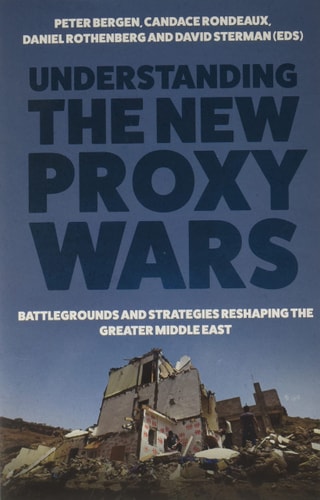
Understanding the New Proxy Wars: Battlegrounds and Strategies Reshaping the Greater Middle East
0
0
As an Amazon Associate and affiliate partner, Menrva Books earns from qualifying purchases. Learn more
Author Description
Proxy warfare will shape the conflicts of the twenty-first century for the foreseeable future. Yet the popular understanding of proxy wars remains largely shaped by the experience of the Cold War. In reality, in the Greater Middle East and its periphery today, the growing power of regional states and non-state actors, combined with the proliferation of new technology, has reshaped proxy conflicts, in an increasingly multipolar and interconnected environment.In this collected volume, a range of researchers examine what constitutes proxy warfare and provide new insight into how these wars are waged, in contexts stretching from Ukraine to North Africa and Syria to Afghanistan. The volume draws upon research, surveys and interviews conducted in Syria, Iraq, Libya and Ukraine, as well as examining the propaganda output of those involved in these countries' wars. In doing so, Understanding the New Proxy Wars helps reveal both the continuities and the differences between recent conflicts and those of times past.
Menrva's Summary
THE THESIS
This volume investigates how modern proxy warfare has evolved beyond Cold War paradigms to become the defining mode of conflict in the twenty-first century. The authors, a team of researchers led by Peter Bergen, utilize a combination of field surveys, primary source interviews, and propaganda analysis to argue that the rise of regional powers and non-state actors has created a more complex, multipolar landscape. By examining specific theaters of operation, the text establishes a new framework for understanding the technological and strategic shifts that distinguish contemporary proxy conflicts from historical precedents.
THE SCOPE MAP
What You Will Find
- Comparative analysis of proxy warfare in Ukraine, Syria, Iraq, Libya, and Afghanistan.
- Examination of the role of non-state actors and regional state power in modern conflict.
- Methodological insights derived from on-the-ground surveys and qualitative interviews.
- Assessment of propaganda output and digital influence operations in active war zones.
THE AUTHORITY PERSPECTIVE
Experts identify this work as a critical update to the study of irregular warfare, noting its departure from outdated bipolar models of conflict. Readers frequently highlight the text's empirical rigor and its success in synthesizing complex regional data into a coherent strategic overview.
Page Count:
416
Publication Date:
2022-12-01
Publisher:
Oxford University Press
ISBN-10:
0197673597
ISBN-13:
9780197673591
Military History
International relations
Geopolitics
Community Tags
Similar Books