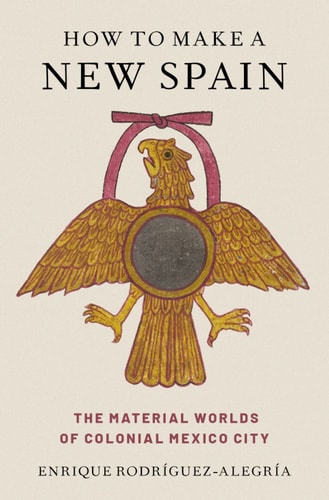
How to Make a New Spain: The Material Worlds of Colonial Mexico City
0
0
As an Amazon Associate and affiliate partner, Menrva Books earns from qualifying purchases. Learn more
Author Description
How to Make a New Spain presents an unprecedented view of the material worlds of Mexico City in the sixteenth century, drawing from a combination of sources and methodologies. It presents the author's original analysis of over 11,000 items in the probate inventories of thirty-nine Spanish colonizers. It also synthesizes information from archaeological excavations of Spanish houses at the center of Mexico City. The book begins with a critique of theories of materiality, in which scholars emphasize the agency of things at the expense of an investigation of social relationships. Rodríguez-Alegría argues that now that scholars have shown that the descendants of the Mexica (often known as the Aztecs) maintained social and political power in the colonial period, we should reexamine how Indigenous people, colonizers, and Black people together created the material and social worlds of colonial Mexico. The book assimilates information on architecture, money, clothing, furniture, pottery, slaves, livestock, and tools to provide a new vision of daily life in colonial Mexico City. It shows that colonialism was based on the recognition of people of similar classes across ethnic boundaries, and on the forging of relationships with powerful Indigenous people. Even colonizers who sought to display distinction from Indigenous people with their material culture depended on Indigenous products and technology to achieve that distinction. The complex history of materiality and power that emerges from this book compels us to reimagine colonial Mexico and the people who created it.
Menrva's Summary
THE THESIS
This book investigates how the material culture of sixteenth-century Mexico City functioned as a primary site for the negotiation of social, political, and ethnic power between colonizers, Indigenous peoples, and enslaved populations. Enrique Rodríguez-Alegría, a scholar specializing in the archaeology of colonial Mexico, utilizes a rigorous interdisciplinary framework to challenge existing theories of materiality. By synthesizing archaeological data from Spanish domestic sites with an exhaustive analysis of over 11,000 items listed in probate inventories, the author argues that colonial power was not a static imposition but a dynamic process dependent on cross-ethnic relationships and Indigenous technology.
THE SCOPE MAP
What You Will Find
- Analysis of 11,000 items from thirty-nine Spanish probate inventories.
- Archaeological evidence from excavations of sixteenth-century Spanish houses in Mexico City.
- A critical evaluation of materiality theories regarding the agency of objects versus social relationships.
- Examination of diverse material categories including architecture, clothing, furniture, livestock, and tools.
THE AUTHORITY PERSPECTIVE
Scholars and historians recognize this work as a significant contribution to the study of colonial social structures through the lens of material culture. Readers frequently note the academic density of the prose and the author's meticulous integration of archaeological data with historical documentation.
Page Count:
339
Publication Date:
2023-01-01
Publisher:
Oxford University Press
ISBN-10:
0197682308
ISBN-13:
9780197682302
History
Colonial History
American History
Archaeology
Mexico
Social History
Economic History
Community Tags
Similar Books














