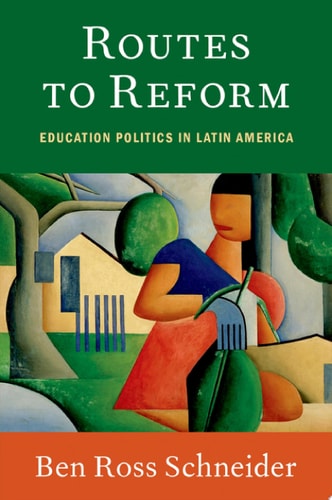
Routes to Reform
0
0
As an Amazon Associate and affiliate partner, Menrva Books earns from qualifying purchases. Learn more
Author Description
Compared To Other Policy Areas Like Health Care, Education Is A Relatively Empty Policy Area Because The Beneficiaries--students And Families, And Business--are Not Politically Active Or Relevant. This Emptiness Allows Reform Opponents Like Teacher Unions And Clientelist Politicians To Have Greater Impact, As Well As Pro-reform Groups Like Civil Society, Policy Networks And Technocrats. Governments That Managed To Overhaul Teacher Careers Took Either A Bottom-up Electoral Route (chile And Ecuador) Or A Top-down Technocratic Route (peru And Colombia). In Other Cases, Machine Unions (mexico) Or Clientelist Politicians (state Of Rio De Janeiro) Overturned Career Reforms.-- Provided By Publisher.
Menrva's Summary
THE THESIS
This book investigates the political conditions and strategic pathways that enable or obstruct systemic education reform in Latin American countries. Ben Ross Schneider, a political scientist specializing in Latin American development, utilizes comparative political analysis to examine why certain nations successfully overhaul teacher career structures while others succumb to political stagnation. He argues that the relative political inactivity of primary beneficiaries—students and families—creates a vacuum that is filled by either reform-oriented technocrats or entrenched interest groups like teacher unions and clientelist politicians.
THE SCOPE MAP
What You Will Find
- Comparative analysis of education policy reform across Chile, Ecuador, Peru, Colombia, Mexico, and Brazil.
- A framework distinguishing between bottom-up electoral reform strategies and top-down technocratic approaches.
- Examination of the influence of teacher unions and clientelist political machines on policy implementation.
- Assessment of the role of civil society and policy networks in overcoming institutional inertia.
THE AUTHORITY PERSPECTIVE
Experts identify this work as a significant contribution to the study of comparative education policy and political economy. Readers frequently note the clarity of the author's comparative framework and the practical utility of his analysis for understanding policy failure in developing democracies.
Page Count:
0
Publication Date:
2024-01-01
Publisher:
New York : Oxford University Press,
ISBN-10:
0197758878
ISBN-13:
9780197758878
Teachers
Education Policy
Public Policy
Sociology
Political Activity
Community Tags
Similar Books