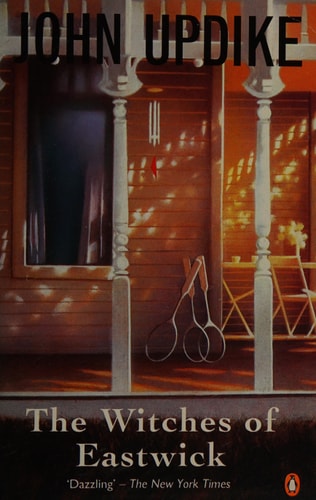
The Witches of Eastwick
0
0
As an Amazon Associate and affiliate partner, Menrva Books earns from qualifying purchases. Learn more
Author Description
Toward the end of the Vietnam era, in a snug little Rhode Island seacoast town, wonderful powers have descended upon Alexandra, Jane, and Sukie, bewitching divorcées with sudden access to all that is female, fecund, and mysterious. Alexandra, a sculptor, summons thunderstorms; Jane, a cellist, floats on the air; and Sukie, the local gossip columnist, turns milk into cream. Their happy little coven takes on new, malignant life when a dark and moneyed stranger, Darryl Van Horne, refurbishes the long-derelict Lenox mansion and invites them in to play. Thenceforth scandal flits through the darkening, crooked streets of Eastwick--and through the even darker fantasies of the town's collective psyche.
Menrva's Summary
THE PULSE
The arrival of a mysterious, wealthy stranger in a small Rhode Island town disrupts the lives of three women who have recently discovered their own supernatural abilities. Alexandra, Jane, and Sukie navigate their newfound powers—sculpting storms, levitating, and transmuting substances—while contending with the social pressures of their insular community. When Darryl Van Horne enters their lives, he acts as a catalyst for their latent desires and darker impulses. The narrative explores the intersection of suburban domesticity and occult influence, utilizing a third-person perspective that shifts between the internal states of the protagonists and the judgmental gaze of the townspeople.
INSIDE THE PAGES
- Exploration of gender dynamics and female autonomy
- Satirical depiction of small-town social hierarchies
- Integration of supernatural elements into a realistic setting
- Focus on the psychological impact of isolation and boredom
- Detailed prose emphasizing sensory and atmospheric descriptions
- Examination of the conflict between traditional morality and individual expression
- Use of the coven as a metaphor for unconventional social structures
- Non-linear progression of the town's collective moral decline
THE COLLECTIVE ECHO
Readers and critics frequently discuss the stylistic density of the prose, noting the author's focus on intricate character studies over rapid plot progression. Discussion often centers on the balance between the supernatural premise and the grounded, satirical portrayal of 1960s suburban life. Many observers highlight the provocative nature of the character interactions and the way the narrative challenges conventional expectations of morality. The atmosphere is often described as claustrophobic and sharp, reflecting the tension between the protagonists' desires and the town's rigid expectations. This work remains a frequent subject of analysis regarding its depiction of gender roles and the subversion of traditional archetypes.
Page Count:
320
Publication Date:
1985-01-01
Publisher:
Fawcett Crest
ISBN-10:
0140073515
ISBN-13:
9780140073515
Literary Fiction
Fantasy
Contemporary
Satire
Contemporary
Community Tags
Similar Books